
In the United Kingdom, police officers stand as sentinels of peace, safeguarding communities and upholding law and order. These men and women, often referred to as the “thin blue line,” are a family, a family that exhibits remarkable heroism and bravery in the face of adversity, dedicating themselves to protecting the public and ensuring justice prevails.
The origins of modern policing in the UK can be traced back to the Metropolitan Police Service, established in 1829 by then Home Secretary Sir Robert Peel. Peel’s principles of policing emphasised community cooperation, crime prevention, and professionalism, shaping the foundation of the UK’s law enforcement approach. From its inception, the police force has embodied these principles, with countless officers demonstrating extraordinary courage in their efforts to maintain public safety.
The tragic death of 46-year-old Sergeant Graham Saville will have hurt the police family. Few officers, serving or retired, will have known Graham personally, but all will recognise him for the job he did, the duty he performed and the risks he was prepared to take to save the life of a complete stranger. The reason, we’ve all been there. We’ve all asked ourselves how we would face that moment when duty requires you to risk your life to save another. We’ve all received training on risk, be it the live railway line, the burning building where people are believed trapped, the frozen lake where a child has slipped into the dark, icy water, the crazed sword wielding madman, the armed terrorist bent on murder, the suicide bomber, and any number of other times where police officers may be called to place themselves in harm’s way. Some of us have taken those risks and survived. Others are not so fortunate. But knowledge of their mortality doesn’t stop those young men and women from taking such risks.
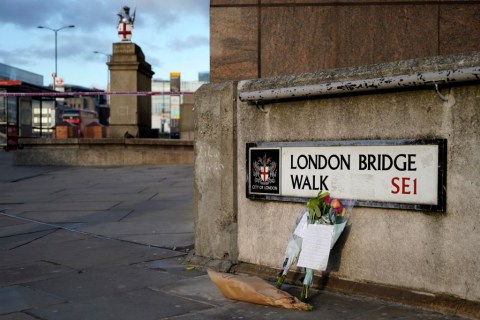
One remarkable example of heroism in recent memory is the response to the 2017 London Bridge attack. In the face of terror and an apparent suicide bomber , UK police officers demonstrated incredible bravery and selflessness.
Armed only with batons and minimal protective gear, several officers rushed towards danger, engaging the attacker carrying what appeared to be a bomb despite the imminent threat to their own lives. Their quick and decisive actions saved numerous lives and prevented further tragedy. These qualities reflect the real character of the men and women of our police services and the commitment, and dedication they exhibit each day.
While high-profile incidents like London Bridge and this week’s death of Graham Saville highlight the extraordinary courage of UK police officers, countless instances of bravery occur daily, often away from the public eye. These unsung heroes respond to emergencies, diffuse tense situations, and protect vulnerable individuals. From intervening in domestic violence situations to rescuing individuals from accidents, their willingness to place themselves in harm’s way for the greater good remains unwavering.

Tragically, some police officers will pay the ultimate price in the line of duty. The UK remembers these fallen heroes through various memorials and ceremonies. The National Police Memorial, located in London, stands as a solemn tribute to officers who lost their lives while serving the public.
These memorials serve as poignant reminders of the risks officers face and the sacrifices they make to ensure the safety and wellbeing of their fellow citizens. The next time you pass one of these, do stop for a moment to think what they represent.
The heroism and bravery displayed by UK police officers reflects an unwavering commitment to upholding the principles of justice, safety, and public order. From confronting immediate threats in high-stress situations to fostering trust within communities, these officers exemplify the true essence of public service. As the custodians of peace, they navigate complex challenges with courage, empathy, and professionalism. The police is a service that has rightly come in for significant criticism of late when some, not fit to wear the uniform, have been exposed. However, we who do not run towards danger, who are not called to enter that burning building or frozen lake or, indeed, to pull a man from the path of an oncoming train; we must remember the legacy of Sir Robert Peel’s principles lives on through their actions, reminding us that the “thin blue line” is not just a symbol, but a steadfast embodiment of bravery in the face of adversity.
Sergeant Graham Saville, I salute you. As I salute each and every police officer prepared to do the job you did.
The photograph above shows former PC John Murray at the first police memorial, dedicated in 1984 to the memory of WPC Yvonne Fletcher. The story of Yvonne’s murder and of John’s incredible 40-year campaign to secure justice for her has now been published. It’s called No Ordinary Day. More about it here.
 Matt Johnson