Matt Johnson on ‘Writing a sequel – Second Novel Syndrome’


snoopy

Stephen Fry put forward an interesting theory about second book syndrome. “The problem with a second novel is that it takes almost no time to write compared with a first novel.

“If I write my first novel in a month at the age of 23, and my second novel takes me two years, which have I written more quickly? The second of course.

“The first took 23 years, and contains all the experience, pain, stored-up artistry, anger, love, hope, comic invention and despair of that lifetime. The second is an act of professional writing. That is why it is so much more difficult.”

As true as it is for ‘one hit wonders’ in the music industry, the challenges of writing a second novel are huge, particularly if the debut has received critical acclaim.

Have you ever read a series or trilogy and found that, despite how much you enjoyed the first book and, perhaps the third, the second one didn’t quite cut it?

The Harry Potter books, for example, are said to have dipped in The Chamber of SecretsCatching Fire was said by some to be a bit of a disappointment after the pull of The Hunger Games.

I’m 94K words into writing a sequel to Wicked Game. At the moment I have a target of about a 110K, which will, no doubt be reduced after editing. The sequel even has a working title, Deadly Game. The outline for the third book, End Game, is also drafted and sitting safely on my PC.

In the case of a trilogy, it’s only natural that the second book should be a bit of a plateau. The author follows a story structure, the one that holds all decent narratives together, the progression from Orientation to Conflict to Climax to Resolution. Of course, within these steps a whole bunch of ups and downs can happen, but basically the average story structure follows that progression.

The first book is the ‘getting to know what’s going on’ and the first conflict, the third is the build-up to the climax, the tying up of loose ends and the finale that you may, or may not expect. The second book falls in that middle bit and will feel, naturally enough, feel like the middle of a story, only over an entire book.

And then there is the additional question. Is the story going to be told in just three books, or is Finlay, the main character, destined to feature in a series? It would make sense, I like him, and it seems that readers do as well, so it would be great to have him prevail and live to fight another day.

Like many debut authors, I was initially bewildered by the success of Wicked Game and so my hands were a bit shaky when it came to doing it all again. Will readers like the sequel as much as the first? Should I change and evolve the style or stick with the same formula that made its predecessor popular? These are all worries (and fair enough ones too) of the sequel-writer, and especially for someone like me, who is only creating their second novel ever.

I am not a trained writer. I have never studied the art of authorship, read about creative writing, or even learned about the English language beyond the standard of ‘O’ levels. I write from the heart, what I see, feel, perceive, and I use the words that I use in my every day conversation. I don’t write to impress, I write because I enjoy it and I gain pleasure from receiving feedback that tells me other people have enjoyed the fruits of my labours. And so, having ploughed the history of my life into my writing, I find myself wondering if it was a fluke, or is it a talent?

writers

Looking at the experience of others, it occurs to me that it could be that the dip in quality or enjoyability of book two is due to the author getting their act together and still getting the hang of their craft.  Did they tread too carefully and follow the exact same pattern they did in their book one?

Is book two destined to suffer ‘Middle Child Syndrome’, leaving poor old ‘Book Two’ to feel caught in the centre? Book one demands all our attention with its intrigue and introduction to the new world, and book three blows us away with its shattering conclusion (well it might if I get that far). Book two is stuck between them,  sadly sighing at the metaphorical dinner table while the readers fuss over the other siblings of the family.

I’ve now discovered that the challenge I face has a name. It’s called ‘Second Book Syndrome’. I also learned – and you’d think I would have known this already – is that writing is hard.

My future plans have also been thrown into a state of flux. With retirement looming, I wasn’t planning on starting another career. The way that Wicked Game has been received has surprised me. To learn that people enjoyed it and for so many to write praising my ‘talent’ for writing, has been a humbling, yet enjoyable experience. The media interviews, radio appearances and the growing readership have been a surreal experience. I have likened it to being a novice surfer, riding the perfect wave and not knowing how to make the best of it or when it will end, crashing down in an explosion of froth.

And at the risk of sounding like a whinger, I have to admit that for a while, in the middle of writing Deadly Game, the realisation that writing is hard has hit home. There are times when I experience periods of serious doubt. Every time a new review appears on Amazon saying how great the debut is and how much the reviewer is looking forward to the sequel, I suffer. Don’t get me wrong, I relish the praise, but every positive review raises the bar. The second book must NOT disappoint.

Sometimes, I wonder if I will ever finish it. At first, I set myself a target of a few months, that soon went by… and then a year. Again, I didn’t make that deadline. The reason? Self doubt. I examined every paragraph, every sentence, every word and ask myself if it is good enough. This writing-stories-for-a-living idea is proving to be a bit of a dream! I’ve now reached a point where I am just writing, getting the story down, and have decided to look at the quality during the ‘proof-reading’ process.


One thing that I am really grateful for is that no reader or reviewer has suggested that I am letting them down by taking my time. Nobody has ever suggested that I am failing.

And I’ve learned something about me in the meantime.

‘I love writing,  but I especially love having written.’
Twitter interview with Fraser from @Feedmyreads

With my focus on writing the sequel to Wicked Game and keeping the marketing plan going, it’s sometimes difficult to find the time to sit down and complete written interviews. Add to this, recent exciting developments that resulted in me signing up with Literary Agents Watson Little and, as I am sure you can imagine, time has been of the essence.
But I did make the time and I’m glad I did. Taking a few minutes to think about what motivates me, why I sit at the PC for hours, why I drive for hours to visit  settings to write about and why I put up with the isolation is brought into context when I get a chance to review how things are going. I’m learning as I progress, and each step is a big one.
I hope you enjoy this. It was completed for Fraser from @feedmyreads who has now interviewed quite a few authors. Thanks Fraser, I was honoured to be asked to contribute.
Who is your favourite author and why?
 That’s a tough one as I have eclectic taste. As a young man I enjoyed Tolkien, but as I have aged my tastes have changed. I used to read Lee Child a lot and have many of the Gerald Seymour books, I especially enjoyed ‘Harry’s Game’. Female authors, I favour Amanda Prowse, who manages to take a reader into the nature of relationships like no other I have read. Overall though, if I were sent away with one book I would take a Ken Follet novel… but I might try and smuggle one by Stephen Leather in my suitcase.
What is your favourite book and why?
 Now that is an even harder question for a Piscean like me. I think I would have to pick the book that started me writing and that would be James Patterson’s ‘Along came a spider’ , a thriller that kept me turning the pages. Patterson was a significant influence on me when I started to put pen to paper myself.

Which of your books you have written is your favourite and why?

 Not hard, as only my debut novel is in print. I started ‘Wicked Game‘ on a bit of a whim. I had never started out with an intention to write but, whilst undergoing treatment for PTSD I used to have to write down my thoughts and experiences before counselling sessions as I would, at first, be overwhelmed by emotion when trying to talk. My counsellor commented favourably on my writing style and that started me thinking. So, I started weaving the notes into a story… and the book developed. The reception it has received has been quite humbling, but the effect of writing it was, for me, very cathartic.

Other than your writing & reading what do you like to do?

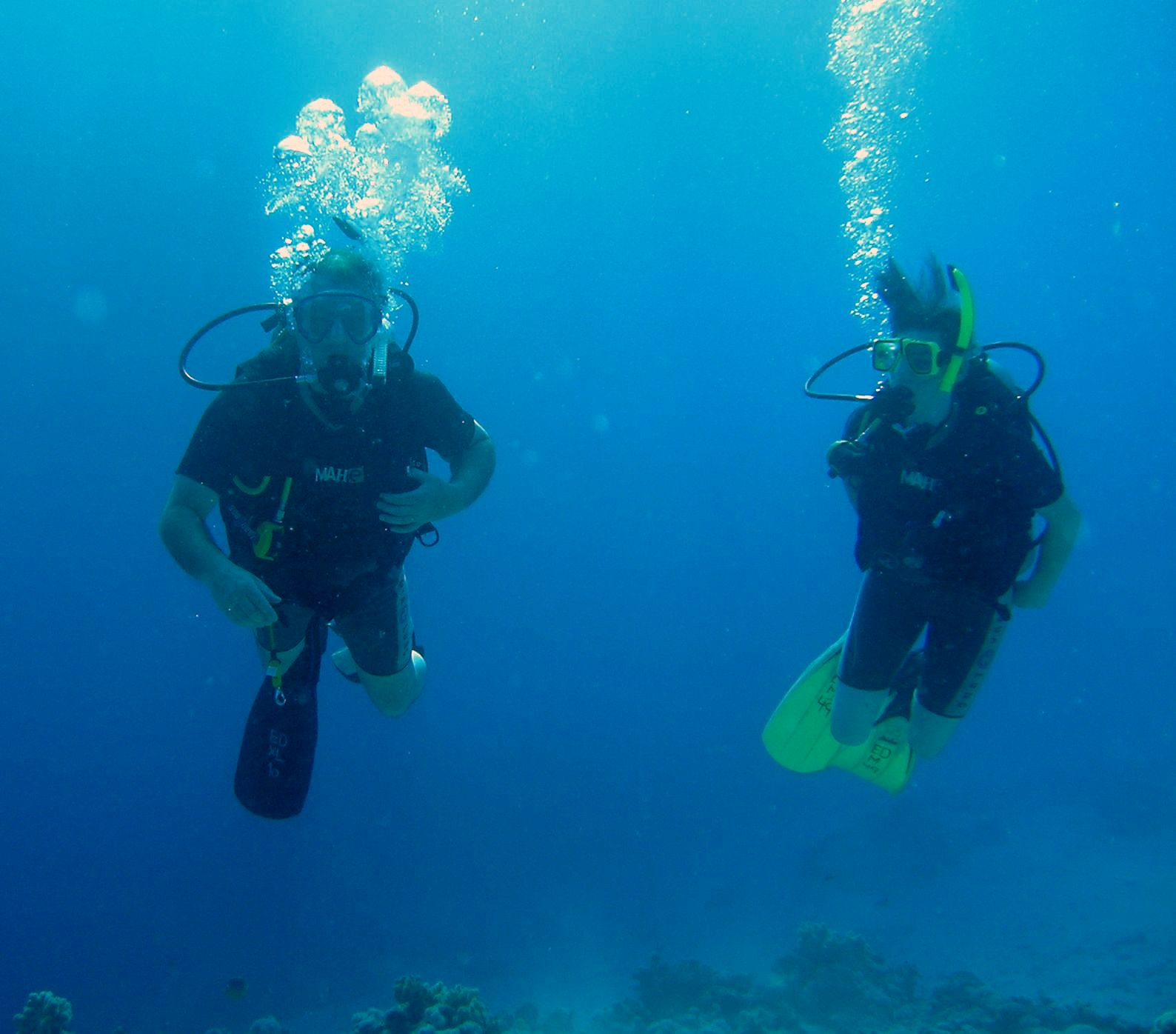
 Too many hobbies and not enough time! I own an old Harley Davidson that I like to get out on when the weather is good, which isn’t too often here in Wales. I learned to scuba dive three years ago, in the Red Sea, and now also dive in UK waters. I’m away this very weekend to Lundy Island off the Devon coast to try and meet up with some seals. 
I write articles for a couple of magazines as a sideline but a lot of my time is taken up with my four best mates, three spaniels and a labrador. They get me out around the fields three times a day. I always take a dictafone with me, to record ideas that come to me as I walk, and to describe things that I see. Very often, these recordings find there way into a book or article.If you could recommend 3 books what would they be & why? 

Harry’s Game by Gerald Seymour, Stephen Leather ‘Double Tap’ and Amanda Prowse latest ‘What have I done’. The first two are great thrillers, the third will really make you think, about love, relationships and people. All three are great reads.

What is SEO?

SEO is a term that caused me some confusion. As an acronym, it means different things to different people.

To me, SEO stands for Senior Executive Officer.

So, when I was contacted recently by Sue Duncan and offered some advice about my SEO, I was initially a bit puzzled.

I was also interested enough to want to know more. It turned out that Sue is a reader of Wicked Game who had also looked at my blog after reading the book. Sue was kind enough to post a great review on Amazon but had noticed my rather amateurish attempts at running a blog.

And so, Sue offered me a helping hand.

It started with an explanation that SEO means Search Engine Optimisation, which to someone like me means that things like Google can find you. Its like holding up a flag that says ‘here I am’. As someone who has only a very superficial understanding of social media and using the internet, Sue’s advice has been very enlightening.

A link through facebook and an exchange of emails followed where I learned slowly about Alt tags, search engine readable titles, links etc. Despite the fact that we live several hundred miles away from each other, the benefits of social media and electronic mail have made communication easy.

I’m writing this post for two reasons. One is to say a huge thanks to Sue, for the review and for the advice… secondly to pass on the tip to fellow independent authors.

As we all know, it’s not enough to write a good book, you have to get people to read it and for that to happen they have to know about it. The advice from Sue is helping me now, I hope it helps you too.

Diving with seals

Following my last post, I thought I might describe how the weekend went.

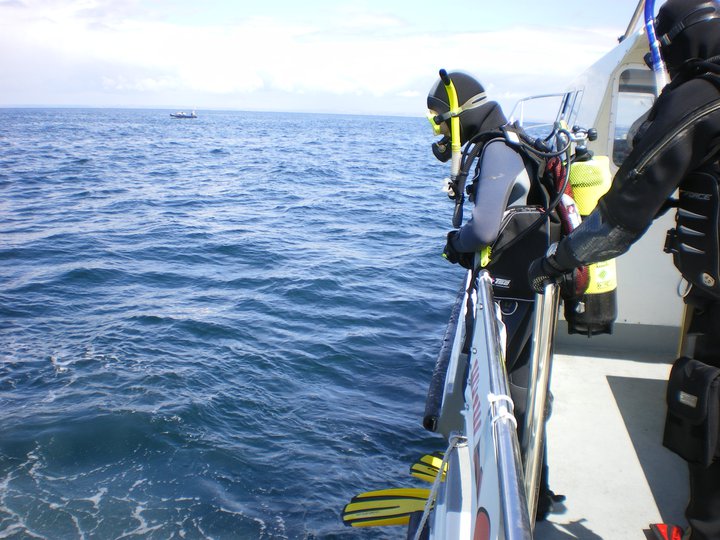
The weather was excellent, sunny with an easterly breeze. Stayed in a bed/breakfast in Ilfracombe, Devon although we were ‘ropes off’ at 0730 in the boat so we missed breakfast.

In the rush to get on the boat I nearly forgot fins, mask and dive computer. Had to jog back to the car and kept everyone waiting for a few minutes.

Boat trip out to Lundy Island took an hour.

Saturday dives were good, saw a dogfish, spider crabs, pollock and lots of colourful jelly fish. That wasn’t what we had hoped for though.

Image

Journey back… a thrill ride. With the tide coming in fast along the Bristol Channel, Steve (our pilot from BC Charters) took ‘Jay Jay’ out boat out of the lee of the island out into the easterly head wind. As sea met wind the waves had built up.

First clue of the rough ride to come was when the boat lifted skyward, crashed down and a wave came over the top of us. I was on the rear deck, T shirt and shorts, and was completely soaked. The return trip took nearly two and a half hours. Luckily, the contents of my stomach stayed with me.

Image

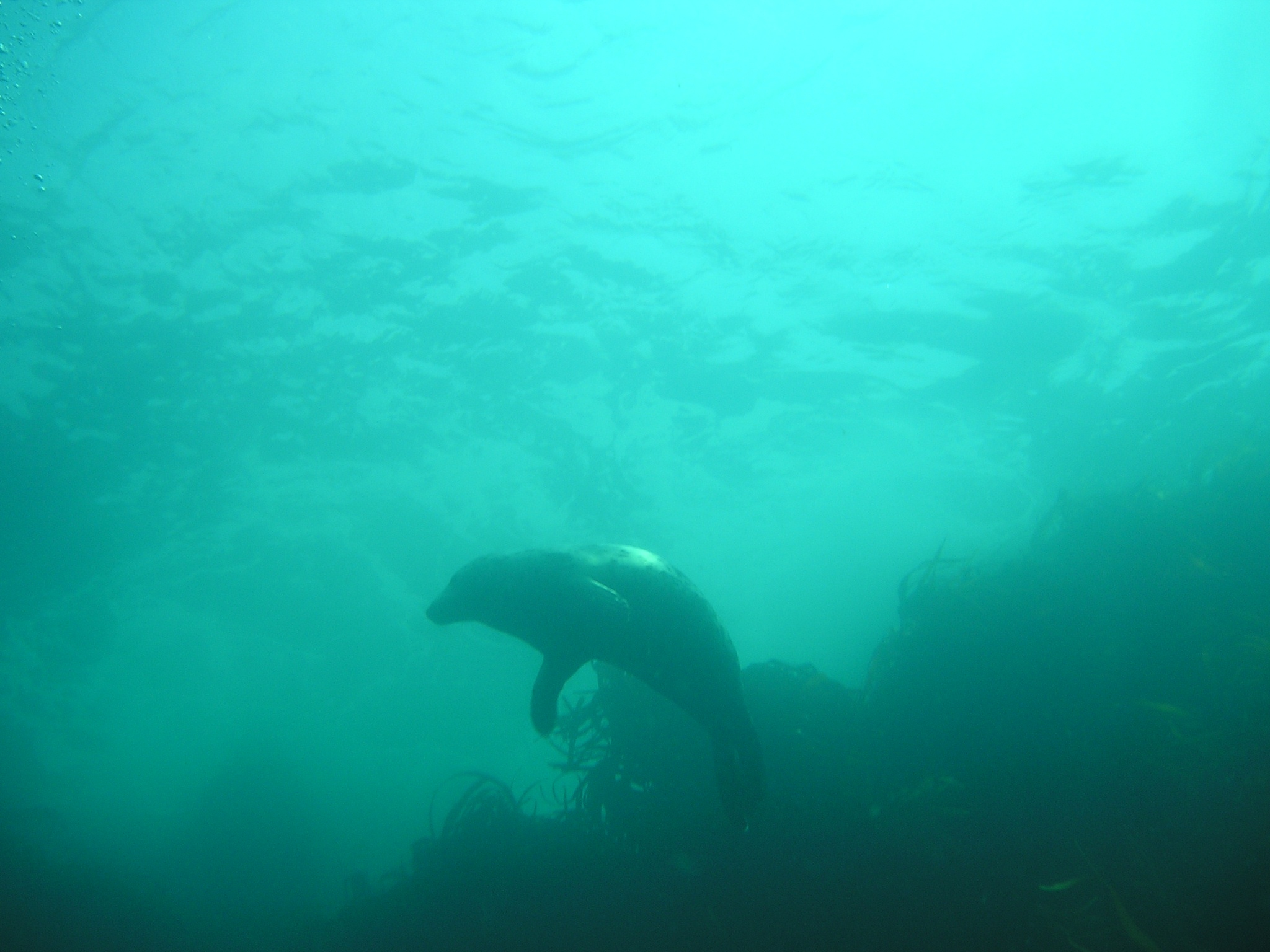
Sunday. We entered the water in sight of some seals that were lounging in the sun. We had been in the water a few minutes when we saw the first of them swim swiftly past us.

It was an incredible moment, to be underwater with these beautiful creatures in their natural environment.

Image

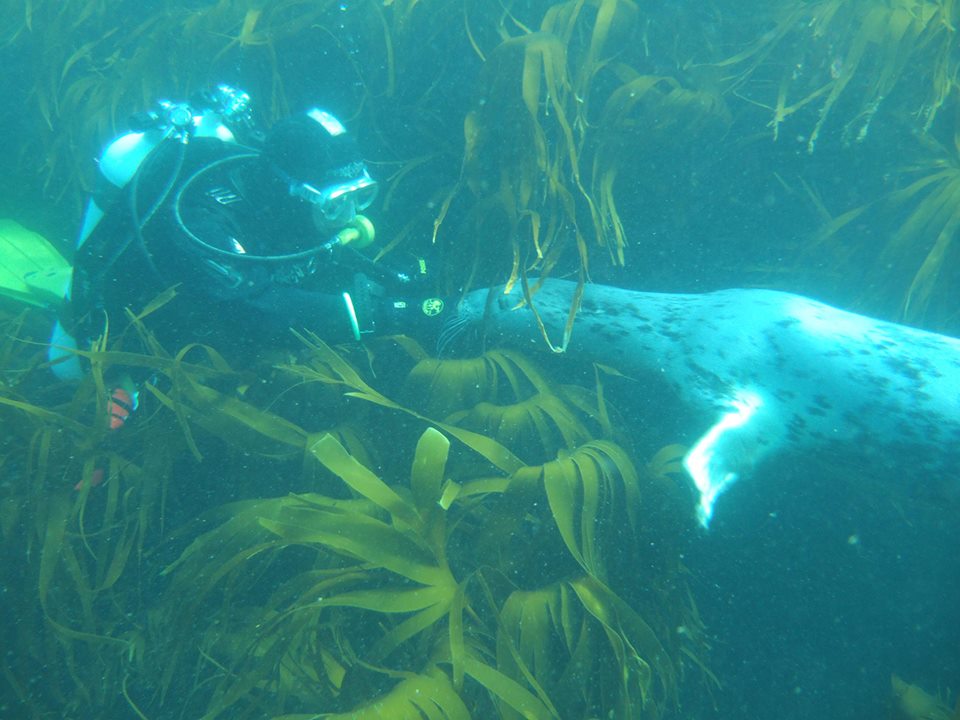
One of them nipped at my companions fins, swam around then nipped at mine.

Getting up close, it was possible to look into their eyes, so dark and attractive.

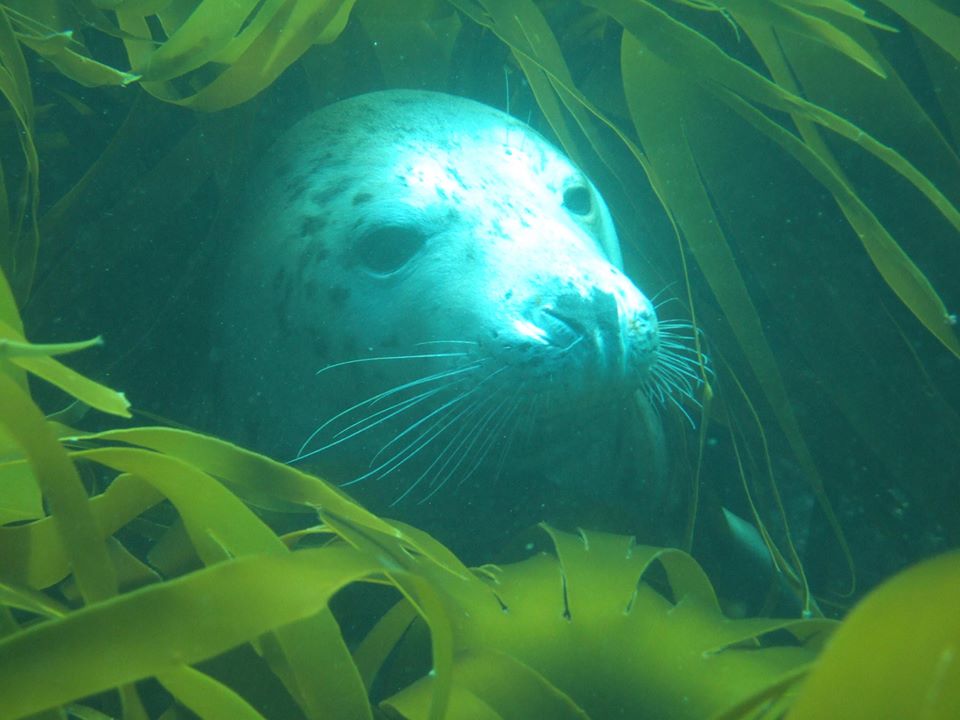
They played with us, their speed and manoeuvrability far exceeding our clumsy attempts to track them and photograph them. The… one of them lay still. It posed… as if to say ‘go on, take my picture’. My mask leaked, such was the width of my smile.

Image

Did you ever see anything as cute as this? Mind you… they have big teeth!

If you ever get the opportunity to dive with seals I would urge you to take it.

For me, Lundy Island provided a ‘bucket list’ tick. Next challenge for me is to get under the sea with dolphins.

Going diving (again)

I wish I had learned to scuba dive many years ago.

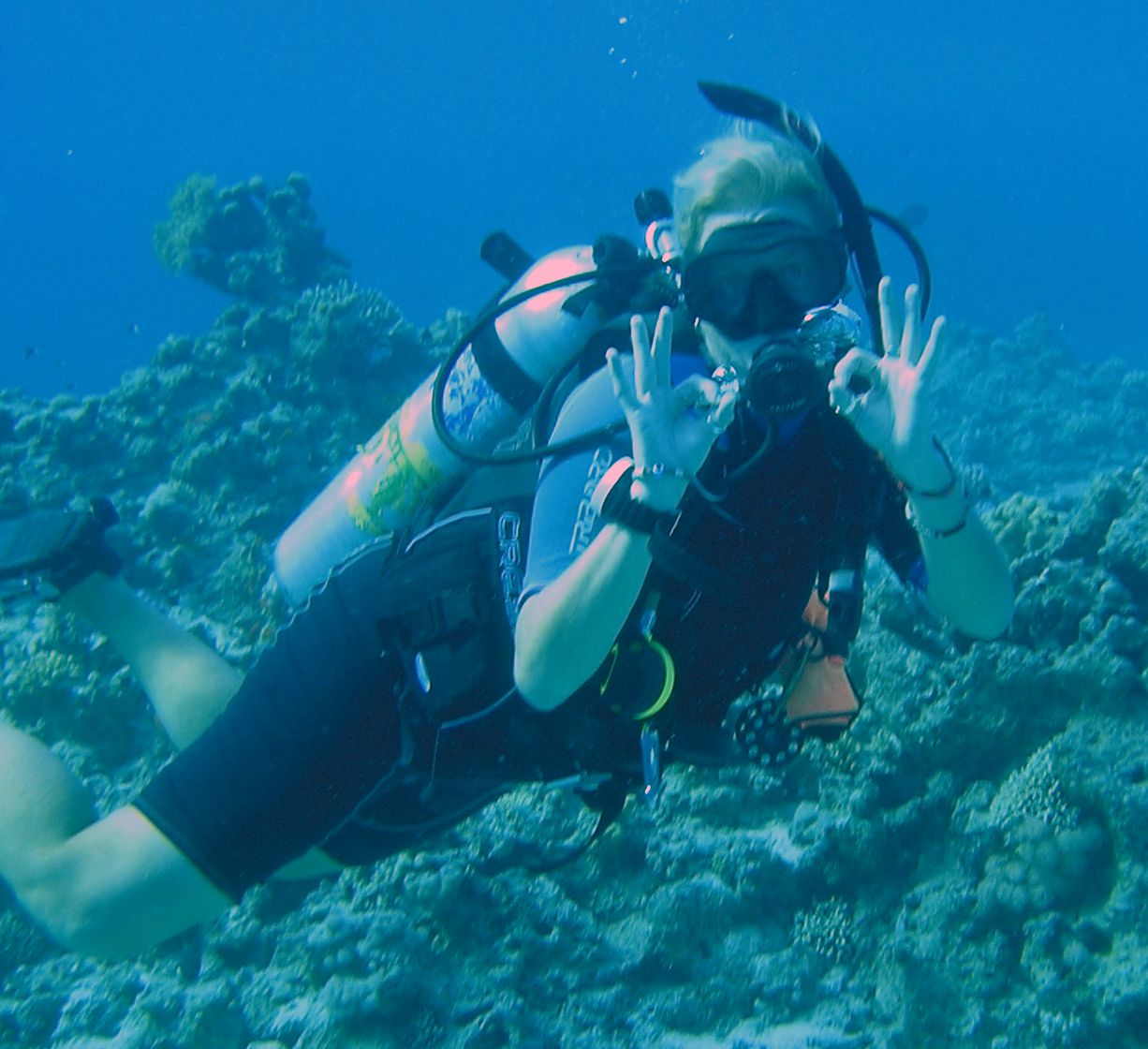
When my daughter decided she wanted to attempt a degree in marine natural history photography at Falmouth, I ‘volunteered’ to learn to dive with her. That was three years ago.

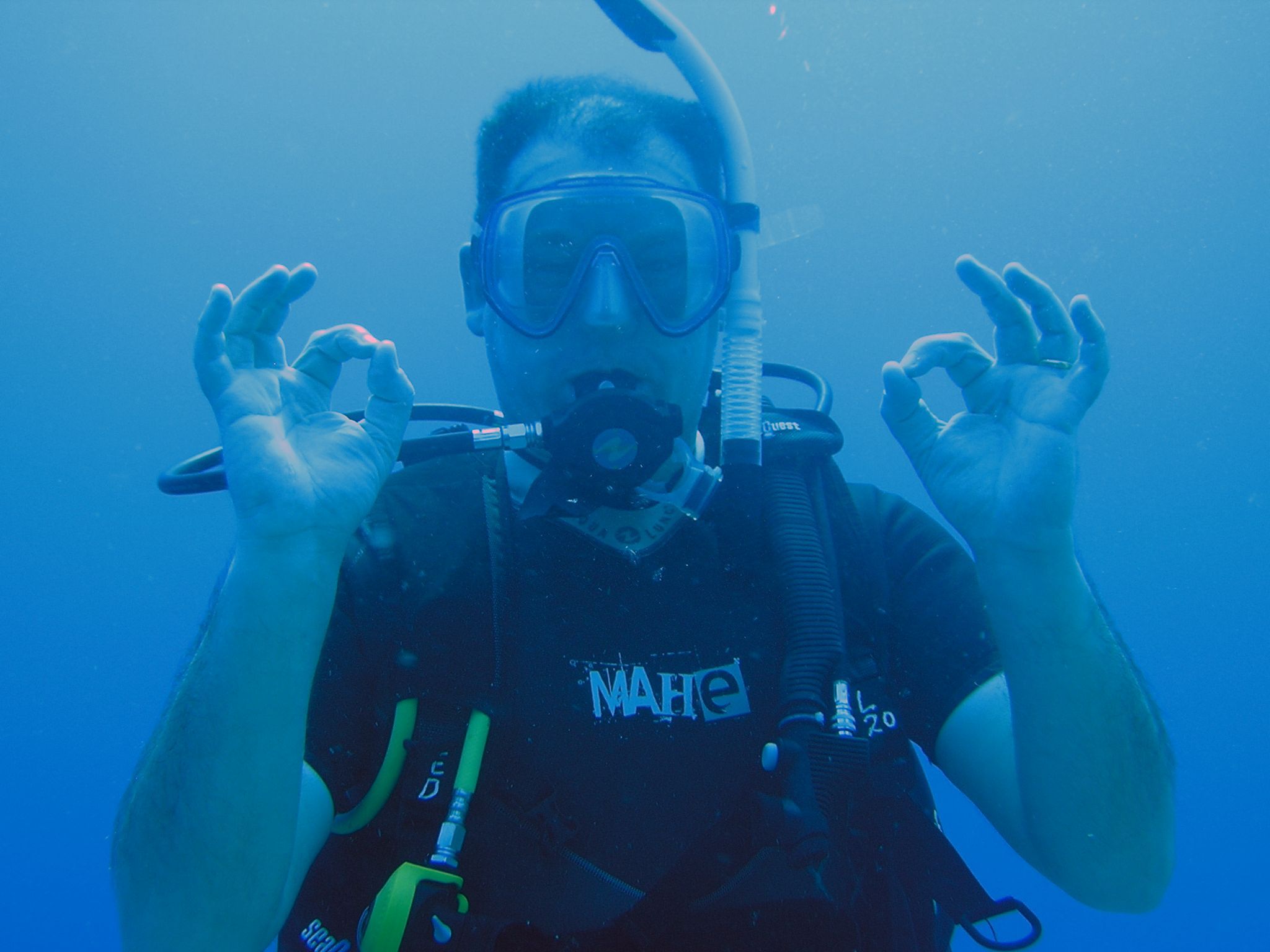
We travelled to Sharm-el-Sheik and learned to dive with Emperor Divers. It was a PADI course, over four days, where we learned the basic skills.


Image

Our instructor was the lovely Catherine Roberts, from South Africa.

Cath was a great instructor and really put us at ease. We progressed well and added on two extra days tourist diving at the end of the course. We were hooked.

We also met a group of lads from the west country in Sharm. It is with this group that I am going this coming weekend. 

Image

Hannah and me.

Over the last three years I have fallen way behind Hannah. She is now a qualified Rescue Diver and is, currently, working her vacation at a Marine Conservation Centre on Andros in the Bahamas. She is there for six weeks and dives every day.

Me, well I spend most days at the PC, tapping away working on the sequel to ‘Wicked Game’ so I dont get a lot of opportunity to dive.

This weekend it will be different. With the UK bathing in the most incredible Summer weather, my friends and I are off to Lundy Island to dive in the local waters which are a haven to many forms of sea-life, especially seals. I’m hoping for some good photo opportunities.

Were staying at a bed and breakfast at Ilfracombe, right on the quay, so we should be able to walk across the harbour onto the dive boat. Fingers crossed for a mill-pond sea for the trip out to the island.

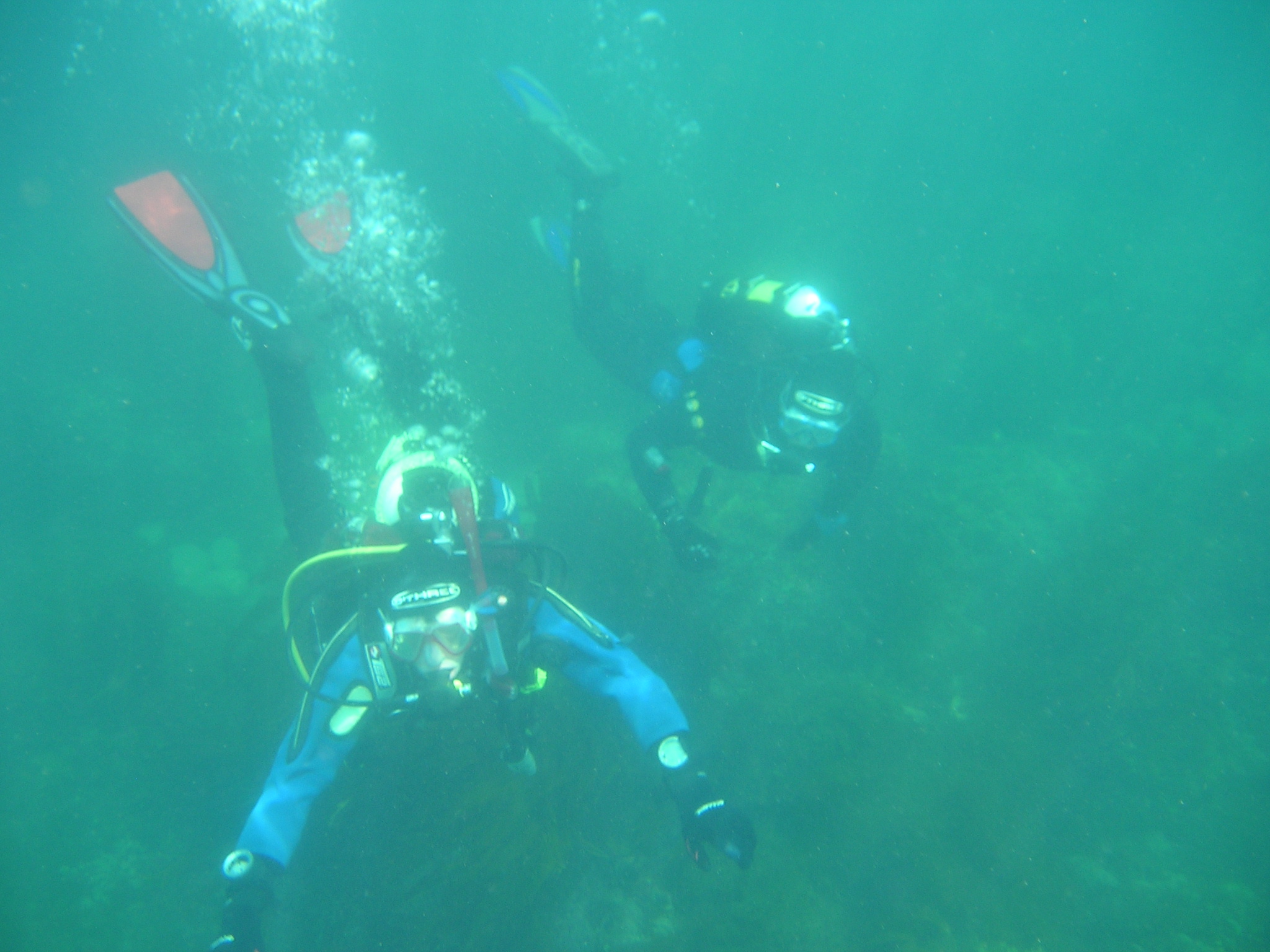
Having now bought a dry suit to help keep me warm in British waters, I can thoroughly endorse UK diving. The Red Sea was a great place to learn but I was still surprised at just how much there is to see beneath the surface of our local waters. Two weekends ago I dived off Pendennis Point in Falmouth, from the shore, and saw crabs, a lobster. a John Dory, blennies, kelp, jelly fish and many other types of fish. 

If diving is something you have thought to try, I would highly recommend it. Like I said, I wish I had started years ago.

Now… to start getting the gear packed.ImageImage

Matt, your cousin is…

A few years ago, 2002 to be precise, I made a journey into family history with my mother.

We were looking into the history of the family on my maternal grandmother’s line. My grandmother was South African, of mixed race, and was born in the Transkei area, south-east Africa.

In the early part of the 20th Century, my grandmother arrived at Swansea on a ship with her elder sister. She was looked after by relatives, so we understand, and went to boarding school.

Her father and mother were due to join them having sailed on another ship. The family had farmed in an area called Mquanduli in the Transkei. When this area was declared a black area under the apartheid regime, my great-grandfather had to abandon his farm. He chose to head back to the country of his birth, the UK.

My great grandfather had married a local woman, a member of the Xhosa tribe. The Xhosa are a large tribe, and, unlike the Zulu, they were never vanquished by European immigrants. My great-grandmother was called Lizzie.

From what we were able to discover, it seems that after packing up their effects, my great grandparents travelled to Cape Town and boarded a ship bound for Bristol. They never arrived. The ship was lost at sea.

My mother and I travelled to South Africa to find out what we could about the family and to see the farm and village that they came from. We were helped in this venture by a vicar from the church in Mquanduli. We saw the marriage certificate and the farm, but we were unable to go into the farm as it was occupied by armed squatters.

It was whilst having tea with the vicar that the revelation was made about who my mother’s cousin is. None other than Mr Nelson Mandela. We learned that Mr Mandela is also Xhosa and was tribal family to Lizzie. Not surprisingly, my mother and I were very humbled.

File:Nelson Mandela.jpg

Nelson Mandela – former President of South Africa

Since then, my mum has written to the great man several times. She always received a response, normally through his personal staff, and, despite his commitments and responsiblities, he has been kind enough to pass on his best wishes to her.

So, as he lies gravely ill in a hospital bed my mum had been rather subdued of late. No doubt, we will soon mourn the passing of such a great man.

The fact that I can call him family is an honour.

Post trauma stress – the cathartic effect of writing

It has quite surprised me how many people are now trying out writing as a contributory means to help treat PTSD, post traumatic stress disorder. Questions levelled at me, as to how writing helped me, have prompted me to put this post together.

PTSD – the chemistry

In examining PTSD, one of the known factors is that an instance of overwhelming terror can alter the chemistry of the brain, making people more sensitive to adrenaline surges even decades later.

This sensitivity to adrenaline surges is a major factor in post-traumatic stress disorder, in which people can experience normal events as repetitions of the original trauma.  PTSD affects combat veterans, crime victims and millions of others. Its cause has biological basis in its affect on the brain.

New studies in animals and humans suggest that specific sites in the brain undergo these changes. Scientists say the findings may allow development of medications to blunt the biological changes present in post-traumatic stress disorder.

For the brain changes to occur, scientists now say that people usually have to experience the stress as catastrophic, an overwhelming threat to life or safety and one over which they have no control. Less severe stresses, such as the death of a loved one or relentless financial problems, do not seem to trigger the biological changes.

When I started  receiving counselling, it was explained to me like this.

When you are working in a high stress environment such as a war zone or any work where you are subject to regular, frequent and high adrenalin surges the brain is slowly, cumulatively, affected by this regular level of adrenalin in the body. Whilst adrenalin is an incredible aid in the preparation for and enactment of the flight and fight response, it has a side effect in that it ‘eats up’ a chemical called serotonin.

Serotonin is a naturally produced chemical that works in the body as a neuro-transmitter. It is widely thought to be a contributor to feelings of well being and happiness. What is does is smoothly transmit thought processes so that the brain operates in an organised and structured way.  Serotonin also has some cognitive functions, including memory and learning. It’s presence in the body is essential to the regulation of mood, appetite and sleep.

So, when exposure to a work environment or a series of events causes the body to regularly produce adrenalin, the effect is that serotonin levels drop.

As a result, the brain starts to operate less efficiently. Thought processes become less clear, sleep is interrupted, memory confused etc.

Then a major catastrophic event causes a massive adrenalin  and chemical surge in the brain. A hormone called cortisol is released into the amygdala section of the brain, the section that handles memory. This hormone release acts as a memory enhancer. Thus, an incredibly detailed and indelible memory of the catastrophic event is retained by the brain.

This enhanced memory explains, to an extent, why victims of PTSD struggle to ‘forget’ the event and move on and also why they suffer flashbacks and dreams about the event.

PTSD symptoms

I wonder how many people reading this will have heard of PTSD and wondered exactly how victims are affected? How many will have seen veterans talking on TV about experiences and see that brave people become emotional and unable to talk any further, the surge in feelings overcoming their ability to talk.

In fact, symptoms are far more wide ranging than most people realise and can vary widely between individuals. They may develop during the first month after a person witnesses a traumatic event. However, in many  of cases there may be a delay of months or even years before symptoms start to appear.

This is a summary, it is not exclusive, as I am not an expert.

A person with PTSD will often relive the traumatic event through nightmares and flashbacks, and have feelings of isolation, irritability and guilt.

Problems sleeping and find concentrating difficult. The symptoms are often severe and persistent enough to have a significant impact on the person’s day-to-day life.

Some people with PTSD experience long periods when their symptoms are less noticeable. This is known as symptom remission. These periods are often followed by an increase in symptoms. Other people with PTSD have severe symptoms that are constant.

Re-experiencing is the most typical and widely publicised symptom of PTSD.

A victim may involuntarily and vividly relive the traumatic event in the form of flashbacks, nightmares or repetitive and distressing images or sensations. Being reminded of the traumatic event (the trigger) can evoke distressing memories and cause considerable anguish.

Trying to avoid being reminded of the traumatic event is another key symptom of PTSD.

Reminders (triggers) can take the form of people, situations or circumstances that resemble or are associated with the event.

Many victims of PTSD will try to push memories of the event out of their mind. They do not like thinking or talking about the event or events in detail. Think of those WWII veterans who well up when being interviewed for documentaries, a display of emotion repeated by Iraq and Afghan veterans who appear to talk about their experiences in more recent programmes.

Some victims repeatedly ask themselves questions that prevent them from coming to terms with the event. For example, they may wonder why the event happened to them and whether it could have been prevented. Often, they may blame themselves and many feel guilt that they survived when others didn’t.

Someone with PTSD may be very anxious and find it difficult to relax. They may be constantly aware of threats and easily startled. This state of mind is known as hyperarousal. Irritability and anger may be a clear indication of this arousal state.

Some victims try to dampen down their feelings by trying not to feel anything at all. If you know an ex-cop or a veteran who you might describe as a ‘cold fish’ then what they may be showing is emotional numbing, a way of coping.

Someone with PTSD can often seem deep in thought and withdrawn. They may also give up pursuing the activities that they used to enjoy.

Other possible symptoms of PTSD include depression, anxiety and phobias. Drug and alcohol misuse are common as a means to dealing with the symptoms experienced.

PTSD often  leads to the breakdown of relationships and causes work-related problem.

Surprised at the range of symptoms? Imagine trying to cope with them and you will have a handle on the challenges facing victims.

Writing

Many victims, me included find that counselling helps them to understand what is going on within their own minds and bodies. It helps to appreciate how a simple chemical imbalance in the brain has been triggered and how the physical and psychological effects that follow are a result of that imbalance.

But counselling doesn’t fix the symptoms on it’s own. Anti depressants are a great help and they worked for me. The pills help the body restore chemical balance so that the brain can then start to regain control.

For me, writing started as a way of helping the counselling. Like many victims, I became emotional when prompted to talk about experiences and describe what had caused the PTSD in the first place. Like many, I was advised not to worry and to try and make notes to bring back to counselling session that I could use to refer to and which might help the counsellor to help me. I made the notes at times when I felt up to it, writing down what had happened, how I had felt, how it had affected me. I recorded dreams that I had, flashbacks and imaginary. Over the weeks and months I found that writing things down helped my brain to get things focussed, to get my thoughts back in order and to regain structure and control.

It helped immensely.

And had an unexpected benefit when my counsellor was moved to comment on how much she enjoyed my writing.

So, one day I followed her advice again and started to weave the notes jotted down into a novel. The more I wrote the better I felt. There were several dips, several times when I found myself reliving things in a way that I preferred to avoid, but, despite the low points, the overall direction was onwards and upwards.

PTSD affects people in many ways, so what works for one will not necessarily work for another, but the fact that so many people have had such enjoyment out of reading a book that came about in such an unexpected way has given me immense reward. People have contacted me, some have described me as inspiring. That may be. What I can say is that the feedback has inspired me to carry on writing and we’ll just see if it continues to help keep the demons at bay. Not just for me, but also for the many others that have and will experience the nightmare as well.

Recommended reading: How the Mind Forgets and Remembers – Dr Daniel L Schacter.

Drummer Lee Rigby – the work of assassins?

The horrendous actions of Michael Adebowale and Michael Adebolajo when they viciously murdered Royal Fusiliers Drummer, Lee Rigby, have caused a huge amount of public outrage over the crime and appropriate expression of  sympathy to members of our Armed Services.

I remember Woolwich Barracks quite well. I attended my first interviews to join the Army there in 1975. My father was a Corporal in the Royal Fusiliers at the end of WWII.

Like many others, I found it both disturbing and confusing that both the attackers waited for police to arrive on the scene, photographed what they had done and posed for cameras and videos with members of the public who were at the scene. I also found it strange that as supposed ‘terrorists’ they attacked no other people than Drummer Rigby and actually allowed people to attend to him where he lay dead, or dying, in the street.

The actions of the attackers reminded me of something I had read about many years ago, something about assassins, where the expression first came from and I realised that the actions of these two murderers seemed to be consistent with a type of Islamic doctrine that dates back to the 11th Century.

At this time, a popular devotee of Islam, called Hassan i Sabbah, used his fame and wealth to found an order called the Assassins. It is said that he did this for his own political and personal gain, and to create a means to maintain that position through the use of fear and violence.

Image

Sabbah, who died in 1124, fought with other Muslims and invading Crusaders from Europe. He set up a fortress at Alamut, now in north-western Iran and then employed his highly trained agents to intimidate local populations. The members of Sabbah’s agency of Assassins had a hierarchy which ranged from the high-ranking ‘Propagandists’ through the middle ranking ‘Rafiqs’ or ‘Companions’, down to the ‘Lasiqs’ who were trained as killers and who were later called the ‘Fida’i’ , the self-sacrificing agents.

There was mystery at the time as to how Sabbah was able to persuade the Fida’i to sacrifice their own lives for his causes and to obey his will without question. It was said that Sabbah used to drug his followers with hashish and then show them a garden paradise filled with attractive young maidens and beautiful plants that awaited them. He would then claim that only he had the means to enable them to return to the known world and that, should they be killed while doing his will that their destiny would be to return to the garden paradise. It was believed that Sabbah was possessed of magical powers that enabled him to do this, a belief that caused his follows to obey his will without question.

Another trick used to convince his trainees was to bury a member of the Fida’i up to his neck in the ground at the foot of the leader’s throne. The exposed head of the man would then be covered with blood. Pupil Fida’i would be invited to speak to the head of the ‘dead’ assassin and Sabbah would then use his special powers to enable the head to talk back to the assembled listeners. The talking head would then tell the assembled Fida’i about the paradise that awaited them after death if they gave their all to the cause.

After the pupils had departed, Sabbah would have the poor actor killed, he would be beheaded, and then his head would be placed on a stake in order that the pupils might be reminded that they had indeed been allowed an audience with a Fida’i who was now in paradise.

Using the Fida’i, Sabbah began to order killings of rival politicians and military leaders. These Assassins, as they became known, were taught to only kill their target and not to attack ordinary citizens to whom they tended not to be hostile. They were trained in the art of combat and in the study of religion, all believing that they were on a ‘jihad’ and were religious warriors.

To reach their targets, the Fida’i had to be both cunning and resourceful. They were generally young as many attacks required them to demonstrate physical strength and stamina. Many were recruited from enemy countries where their familiarity with the language and customs would enable them to infiltrate more easily.

Murders of religious and political adversaries were usually conducted in full view of the public, so as to instill terror in their foes. Civilians were never targeted, the argument being that it would cause strife and discord and lead to the ruination of the reputation that the Fida’i had created for itself.

Assassinations were mostly carried out using a dagger, which was sometimes tipped with poison. Sometimes, the target would not be killed, the desired objective being achieved by leaving a note, together with a dagger, in a place such as a personal bedroom, where the ‘victim’ would know what could have happened should the assassin have desired it.

Almost all Fida’i attacks were suicide missions, particularly if the target were to die in a public place. But in no circumstances were the attackers allowed to commit suicide, preferring to be killed by their captors.

At their peak, many assassination type murders of the day were attributed to the Fida’i. Other factions, including the Crusaders, used such methods, but the fact that the Fida’i operated in public and often in broad daylight, brought them a special reputation.

The Assassins were finally killed off by the Mongol Empire, when their home at Alamut was destroyed in the 13th Century. But the ideas Sabbah created, the methodology behind such murders and the idea of a paradise that awaited those that participated still exists into modern times.

I would never be minded to suggest that this serves in any way to explain the horrendous actions of these two murderers at Woolwich. But the coincidence, as to the way the Fida’i were taught and the way that these two men acted, I find inescapable.

Latest reviews

Only a very select band of writers/authors make a good living from their work. For most authors it is appreciation and feedback that makes the effort worthwhile.
When people I have never met or previously heard of post reviews like this it gives a writer a great feeling and the motivation to keep on doing it!
Most Recent Customer Reviews from Amazon/Goodreads
5.0 out of 5 stars Great read
I read the paperback and found it thoroughly absorbing and hard to put down. The plot and characters drew me in and kept me wanting to know what happens next…
Published 4 days ago by Bri
5.0 out of 5 stars Wicked…
There are novels about the SAS and there are novels about the police, & there are novels about the Secret Service, but this is the first novel I have read that skilfully combines…
Published 13 days ago by R. Edwards
5.0 out of 5 stars Wicked Game a bloody wicked Book
This book is superb. Right up my street as i read a lot of michael connelly, james patterson and lee childs books. This book had me hooked and i cant wait for more from the author.Read more
Published 15 days ago by Chris
5.0 out of 5 stars Wicked Read
A great first book from Matt Johnson fast paced from beginning to end. Looking forward to his next book out this summer. I think Matt will soon be up there with the big boys .
Published 18 days ago by ALAN G BUMFORD
4.0 out of 5 stars Wicked Book
Really enjoyed this. Got to know the characters well and the pace quickened as the book went on. Descriptive, excellent dialogue and a gripping ending!
Published 19 days ago by Julie marshall
5.0 out of 5 stars Great book!
I’ve read a lot of chris Ryan’s books and heard on the grape vine that this was just a good as his, well I have to agree!
Published 26 days ago by Shaunw86
5.0 out of 5 stars Good read.
Another well written book giving an insight to ex SAS soldiers possible employment when leaving the service and how their training gives them confidence.
Published 27 days ago by Mr. J. Thomas
5.0 out of 5 stars Exciting thriller.
A very exciting thriller,brilliant twists to keep you reading. Couldn’t put it down until I had finished the book. Can’t wait for the next one.
Published 1 month ago by maxine farr
5.0 out of 5 stars Excellent read
A brilliant debut novel from Matt Johnson. I couldn’t put it down and didn’t want it to end. A gripping story from start to finish.I’m so looking forward to his next book.
Published 1 month ago by Jill P