Thank goodness for spell cheque…

Ode to the Spell Check/cheque

Eye halve a spelling chequer

It cam with my pea sea

It plainly marques four my revue

Miss steaks eye kin knot sea.

Eye strike a key and type a word

And weight four it two say

Weather eye am wrong oar write

It shows me strait a weigh.

As soon as a mist ache is maid

It nose bee fore two long

And eye can put the error rite

Its rare lea ever wrong.

Eye have run this poem threw it

I am shore your pleased two no

Its letter perfect awl the weigh

My chequer tolled me sew

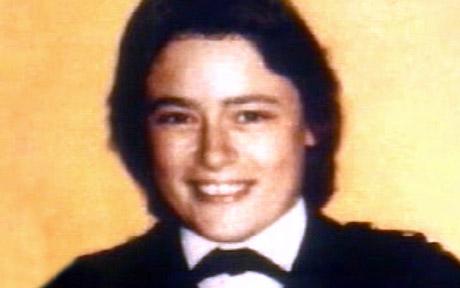
WPC Yvonne Fletcher

On 17th April 1984 I was a 27 year old advanced car driver working in central London on a police traffic car.

On 17th April 1984, my friend WPC Yvonne Fletcher was a 25 year old officer on the Vice Squad at West End Central Police Station. My wife of the time served on this same squad.
Image

Yvonne had been at a party at my home a few weeks before this. My last memory of her is of seeing her sitting at the bottom of the stairs in my house, looking like she had enjoyed a good evening.

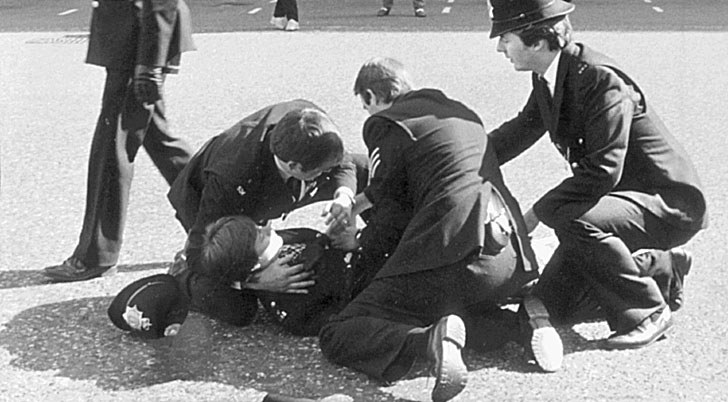
At 10.18 am Yvonne was with a small contingent of officers supervising a demonstration outside the Libyan Peoples Bureau in St James Square, London. Her fiancé was among the officers with her. Yvonne had her back to the Bureau.

Without warning, someone in the Libyan bureau fired a Sterling submachine gun into the group of protesters and police officers. Eleven people were hit by bullets, including Yvonne.

This a video of the demonstration and the immediate aftermath of the shooting.

http://www.youtube.com/watch?v=vdg0BGzKCmc
Image

One of the uniformed officers trying to help Yvonne is her fiancé.

An ambulance was quickly sent to the scene and my patrol car was sent to escort the ambulance to the Westminster Hospital.

Anyone who has worked in central London will know just how quickly a major incident can cause the streets to become blocked. Main roads rapidly snarl up and the side streets and rat runs that the taxis and locals use, soon follow. Gridlock is the result.

Getting the ambulance to the hospital proved to be a nightmare. We were forced to drive onto pavements and, on several occasions, we had to get out of the car to get vehicles moved so we could get through. At that time we were aware that the casualty was a police officer, but didn’t know who.

I remember that the ambulance overtook the police car just before we reached the hospital. We had to get out of the car to clear traffic from a junction and the crew seized the opportunity to make progress and get through. When we pulled in behind the ambulance, Yvonne had already been taken into the emergency area. I remember seeing the fantastic efforts and the work that was being put in by the nursing staff to help her. They were fantastic and couldn’t have tried harder.

Yvonne died from her wounds one hour later. She had been shot in the abdomen area.

After escorting the ambulance, my car was sent to help with the traffic chaos that followed the start of the resulting siege.

I went home that afternoon and switched on the six o’clock news. It was only then that my former wife and I learned that the murdered officer was our friend.

In the days that followed I was assigned as a driver to the SAS team that had been brought in and stationed at a nearby RAF base. My job was to run them around, in short I was a gofer and taxi driver. Notwithstanding the final result of the siege, I have every confidence that had those soldiers been given the order to storm the Bureau, that the action would have been over very quickly. I made frequent trips to the infamous ‘blue screen’ that was built to block the view into the square and I was present on the night that something amazing happened.

Yvonne’s hat and four other officers’ helmets were left lying in the square during the siege of the embassy. Images of them were shown repeatedly in the British media. They came to represent something quite iconic as a symbol of unarmed police officers who had been attacked to ruthlessly.

What happened was that a PC, acting completely on his own, ran into the square and snatched Yvonne’s hat. There were shouts of ‘get back, get back’ from the firearms officers but the unarmed PC was determined and fast. As he returned to the blue screen, he was bundled away by a senior officer and a firearms officer. I never did find out what happened to the PC but I suspect he got into trouble.

Image

Fact is, what he did was a reckless thing to do. It is quite possible that the hat may have been playing a part in the hostage negotiations that were going on behind the scenes. We will never know. But what I can tell you is how much that PCs actions lifted the spirits of people like me who were sitting watching while the ‘powers that be’ seemed to be doing very little. Grabbing Yvonne’s hat from under the noses of the terrorists stuck two fingers up to them and told them what we thought of them.

To that anonymous PC, I say thanks.

The ‘Peoples Bureau’ was surrounded by armed police for eleven days, in one of the longest police sieges in London’s history. Meanwhile, in Libya, Colonel Gaddafi claimed that the embassy was under attack from British forces, and Libyan soldiers surrounded the British Embassy in Tripoli.

No satisfactory conclusion was reached in the UK, and following the taking of six hostages in Tripoli, the occupiers of the Bureau were allowed to fly out of the UK. The Tripoli hostages were not released for several months, ironically almost on the exact day that the memorial to Yvonne Fletcher was unveiled.

In July 2012 Andrew Gilligan of The Sunday Telegraph received reliable reports that Salah Eddin Khalifa, a pro-Gaddafi student, fired the fatal shot. Unlike a previous suspect named as the killer, Mr Khalifa is known to be alive and may, one day, be arrested. He is currently living in a North African city, to which he moved as the Gaddafi regime crumbled.

So today, when all the worlds eyes are on the funeral of the Prime Minister who was in power on the day that Yvonne Fletcher was shot, please spread the word to remind people that there are others who should also be remembered today and that there are those of us who do remember.

And let’s remind Salah Eddin Khalifa that we haven’t forgotten.

Image

No ordinary I.E.D

At 2100 hrs  on 10th April 1992 I had a very luck break. I was on duty as a uniformed inspector in Hackney when I was called into the police station and ordered to a neighbouring area where streets were being sealed off following a bomb threat. I went to the scene with three other officers. At 2120 hrs an IRA bomb consisting of 100 pounds of Semtex wrapped in fertiliser exploded in a van parked outside the Baltic Exchange. The one-ton bomb was contained in a large white truck.  It killed three people: Paul Butt, 29, a Baltic Exchange employee, Thomas Casey, 49, and 15-year old Danielle Carter. Another 91 people were injured as the bomb ripped through the Baltic destroying offices of major companies in the building.

The first thing I knew of the blast was a flash of light, like a camera flash, only it filled the street. Then my recollection is confused. I recall a sound like scaffolding crashing down and a thump that hit me in the face and chest. I don’t think I was knocked out, but I was knocked over.  All around us windows had been smashed and, there was dust, huge amounts of dust. That dust is my lasting memory, as it confused us and interfered with breathing and sense of direction.

A hundred or so yards away, the Baltic Exchange had been destroyed.

It was my first, direct experience of an I.E.D. I had attended the aftermath of bombs before and been involved in trying to catch the bombers, but I had never been there at the time of the explosion.

I was lucky. And when I see television reports about the affect that recent exposure to I.E.Ds has on our brave soldiers it gives me a little insight into how they feel. I also wonder if anyone like me, who had lived with PTSD for over 20 years, feels a little uncomfortable with the way the condition has become a bandwagon to be jumped on, now that more is known about it. It troubles me when I see the number of ‘help’ organisations being started up, when people use it as an excuse for criminal activity and when it seems it is becoming almost fashionable to be a sufferer.

Perhaps I am becoming cynical in my later years, perhaps I have been influenced by recent exposures of con-men who have started fake charities to steal when pretending to help? Perhaps the condition itself affects my impartiality?

London’s latest landmark, the Swiss Re tower, also widely known as the Gherkin, now stands on the site of the old Baltic Exchange. A phoenix has risen from the ashes.

The 1992 bomb caused £800 million worth of damage, £200 million more than the total damage caused by the 10,000 explosions that had occurred during the Northern Ireland troubles.

As today is the anniversary of this awful event, please take a moment to think about the victims of the ‘troubles’ and say a silent thanks for the relative peace that we now enjoy in this country. And for the people who think they can ride the PTSD bandwagon to con money out of others, I would say one thing.

Don’t.

April (fool) Competition – Winner announced

Draw made – winner below

Thanks for all the entries – as promised, everyone who guessed correctly will receive a signed copy of the sequel as soon as it is published.

Over the last year, I have received some wonderful reviews for Wicked Game which have inspired me to keep writing. I have, therefore, decided to publish a 2nd edition in April 2013, a year after the book was released. The 2nd edition will tidy up some of the typos that have been found . The story hasn’t changed.

I am working on the sequel (bk 2 of 3) which is currently entitled Deadly Game.

Talking recently to Peter James, I was given the idea of using the name of a reader in the sequel as a small thank you to all the people who have read the book and especially to those who have kept in touch with me through Twitter and Facebook, and extra especially to those who have taken the time to write a review.

It is to the reviewers that I owe the greatest thanks, as it is you that have convinced others to use their hard-earned cash to buy a copy of the book on the strength of the reviews. Those purchasers have not been disappointed and they, in turn, have reviewed the book favourably.

For me, as a new author, to have my writing compared to the likes of Lee Child, James Patterson, Ken Follet, Chris Ryan, Andy McNab and other well known names is really very humbling.

So, I have had the idea for a little competition. I have called it the April (fool) competition as you have to be a bit crazy to enter. The prize is simple, I will name a character in Deadly Game after you and send you a personal signed copy.

Entries start on April 1st and end April 14th. You need to refer to the 1st edition of Wicked Game, as the mistake is rectified in the 2nd.

Question. In chapter 25, Finlay breaks down on the motorway. As he is sitting in the rain, waiting for help, he hears something on the radio. That something could not have happened. What was it and why could it not have happened?

You can post your answers here, or send me a message via FB, email or Twitter. I will keep the responses under wraps until 14th April.  Then I will post the answer here and the name of the ‘lucky’ winner. I’m not promising that the winner will feature as a good guy or a bad guy, so that’s why only the brave should enter!

All the correct answers go into a hat, and the lucky (or unfortunate) winner will find that a character in Deadly Game bears their name.

Good luck… and get reading!

ANSWER – Finlay was listening to ‘If tomorrow never comes’ by Ronan Keating as he waited in the car. As the story is set in August/Sept 2001 and this song wasn’t released until 2002, that could not have happened. 

There were some interesting ideas about Jon Peel (died 2004 so he could have been on the radio), and playing songs in a 60s special that were not from the sixties ( could have happened?), but the one thing that absolutely could not have happened was Finlay listening to the Ronan Keating song.

I hope you enjoyed the fun, the winner

Dave Batey. Congratulations Dave. Drawn by random lot last night.

Now… good guy or bad guy?

Wicked News from Apple

Image

As of March 2013 Wicked Game has been selected as one of the Apple store (UK and Ireland) top 55 debut novels and has been listed in their top ‘Breakout novel’ listings. Its great news that came to me through Smashwords creator Mark Coker in an email this morning.

I was reticent about withdrawing from KDP select but sales through the iBookstore and the reviews on the Apple site have reassured me that it was the right decision to try and reach out to a larger readership. Apple are going the extra mile to support independent authors, they are to be congratulated and thanked for doing so.

Here’s a link if you have an iPad, iPhone or iPod touch with iBooks and on your computer with iTunes. Books must be read on an IOS device.

Available_on_the_iBookstore_Badge_US-UK_146x40_0824

At just £1.99 I estimate it takes about ten hours to read, on average. That works out at just 20 pence per hour to be taken into a new, exciting and informative world from the comfort of your own home, on the train, the plane or the beach, wherever you like to read. Read a book – it’s the best value entertainment that money can buy.

You can learn more about the Apple #Breakoutbooks listings from Smashwords via 

http://blog.smashwords.com/2013/03/apple-ibookstores-in-uk-and-ireland.htm

But for me… back to the writing. Half way through the sequel and going strong!

Matt J.

Unethical means to promote book sales

Strange goings on in the world of books and writing. This morning I listened to a Radio 4 programme about a U.S based company called Resultsource that, for a price, will promote sales of your book. They do this, apparently, by buying thousands of copies which gets the book in the best seller list. The author then does a book tour and it is said, buys the same books from resultssource and then sells them on during the book tour. Clever, but not very ethical.

Now I had heard about a small company that sells 5* reviews for e-books at 10$ per review, but this takes things to a whole new level.

I had a close brush with ethics myself just yesterday. A friend pointed me in the direction of YattarYattar magazine, who do book reviews. I spoke to them and they said they would like to do an interview and review. Then came the crunch, they sent me an invoice! They want me to pay £150 plus VAT to be written about in the magazine.

I decided to pass on this ‘golden’ opportunity.

But, from the reviews in Yattar, it seems there are authors who will pay up. Just have to question the validity of the reviews now, and maybe I will bear that in mind before I part with my hard-earned cash to buy a book they recommend.

An author and his manuscript

On Friday I had a long chat with a literary agent who was kind enough to ring me after reading the novel. He had been recommended to look at the book after an author he represents had read it. In may ways it’s one of those lucky breaks that a new chap like me needs.

It wasn’t a surprise call as the fellow author had asked me if I minded the approach and I was aware the agent was reading the ms. I checked him out, looked at the other people he represents and made some discrete enquiries. He came with a good reputation, works hard for his authors and knows his stuff.

So, it was with some trepidation that I received his call. We spoke for nearly an hour. He had clearly gone through the book thoroughly, looking at the story, the style, the plot, the grammar and all the other important factors that contribute to making a book into a book that will be a popular read.

His analysis was flattering. I felt a little humbled. Here was an expert saying rather nice things about me and about my potential to carve out a career in writing. Then came the crux. His opinion on the perspective in which the book was written.

I mixed 1st and 3rd perspective when writing the book. I used 3rd person for those parts that the main character was not involved in, and 1st person when he is. My reason – the story is from me, pulls in my life experience and started from notes used to help me treat my PTSD. It started as my story,only ending up as fiction as I developed it.

For me, writing it was a cathartic experience. I liken it to the benefit you gain when you have lots to do and your brain struggles to prioritise. If you make a list then what seems confusing and stressful comes into focus, you see the words and the problems or challenges seem more easily achieved. Writing about the causes of my nightmares, anxieties and stresses seemed to exorcise them from my mind. The turmoil lessened and I was able to regain focus to my thought processes. 

What the agent wants me to do is re-write the book in the 3rd person, something I initially felt might take away the personal attributes that 1st person perspective enabled me to impart in the main character. As I wasn’t sure I had to ask myself if I trusted his judgement. Answer – yes. It was clear from the time and effort he had put into reading it and the way in which he explained his reasoning that this was good advice. I also asked a few people who had read the book. They all agreed with the agent.

I don’t know if today is a watershed for me, but today I am about to start changing the novel to the style that has been recommended. It wont be a quick job, but I think it will be worth it.

Only time will tell. 

Hmmm… wonder if I might get a vote? You never know!

Joanne Phillips's avatarJoanne Phillips

Happy Wednesday, and welcome to the second of my We’ve Got It Covered posts. Today is the start of the Indie Cover Hall of Fame competition, and I’m asking all readers to nominate their favourite indie-author cover. Here are the ‘rules’:

  • You can’t nominate your own cover, or one that you’ve designed (if you’re a cover designer)
  • One nomination per person please
  • The book can have been published at any time but must be self-published and available for sale now
  • Please provide the link to the book with your nomination, the author and the title.
  • Tell us why you like the cover so much. What is it about the design that really grabs you?

It’s as easy as that! Last week we talked to cover designer Berni Stevens, who mentioned that many author-designed covers were identifiable because of typeface design. I’d have to agree – one of my pet hates…

View original post 367 more words

Identity stolen!

This morning, I was contacted on twitter by a reader and by txt from my ex-wife to say that a profile had appeared on a dating website that was using pictures and information that made it appear to be me.

I won’t name the site as I have written to them asking for them to find the profile and remove it. Provided they do so that will be the end of the matter for me.

But it raises a very interesting issue. My twitter and facebook profiles have pictures and information that can be copied. I don’t mind, as by writing for public consumption I put myself in the public eye. What I hadnt expected was to be impersonated.

Some poor female (presumably) could be chatting to ‘me’ on this dating website. ‘I’ could be saying anything. The potential for damage is huge. My impersonator might arrange to meet his new ‘friend’. Then suppose something happens, a crime is committed, and the cops come looking for Matt Johnson? Suppose the lady consents to sex, thinking they are with me? That would be rape by impersonation!

They say that impersonation is the sincerest form of flattery. Blow that!

For the record, I am not registered with any on-line dating agency anywhere or of any kind. If you are a victim of this impersonator then report him, and quick!

Addendum 22/2/13. And a warning to ladies who use dating websites. It seems the use of other people’s identity is quite commonplace, and is often used to establish a cyber connection. The identity thief has no intention of meeting females. What these men do, it seems, it to seduce ladies into exchanging photos, and the more pornographic the better. The lady thinks she is sending pictures of herself to a personality but in fact it it some some seedy little guy sitting at home on his PC tricking women into sending him dirty pictures. Be warned girls – don’t fall for it!

The SAS war diary

Thanks to the SAS Regimental Association for this;

In early 1946, a former SAS soldier tasked himself with one final mission.  The SAS had been disbanded and there were no plans to resurrect it.  The soldier’s self-appointed mission was simple: to find and preserve whatever documentation he could before the SAS was forgotten and its story lost for ever.

The soldier tracked down the Top Secret order authorising the first ever SAS operation; he sought out photographs of the original members of 1 SAS, including men lost on that first operation; he somehow acquired the after-action reports from the few who survived.

Then with more photographs, operational orders and reports (all Top Secret), and a handful of newspaper articles from Britain and even America, he traced the story of the SAS through North Africa, Sicily, Italy and France, on to the drive through Europe for Berlin, until the final march past when the SAS was stood down.

By mission end, the soldier had produced something unique – the first ever history of the SAS, collated by an SAS man.  Not only that, in the event of the SAS being consigned to a footnote in history, and with many of the documents he had copied either destroyed or lost forever, he had saved the story of the SAS during World War 2.

But the soldier did something else.  He collated his work in a single massive war diary, measuring 17” x 12” x 4” and weighing over 25 lbs, and bound it in leather “liberated” from Nazi Germany. Without knowing it, the soldier had created an icon. Shortly before his death, he visited the SAS Regimental Association, and gave them … The SAS War Diary.

The Association locked The Diary away in its archives … and its existence remained a secret …. Until now.

To mark the 70th anniversary of the founding of the Special Air Service, and in collaboration with the SAS Regimental Association, Extraordinary Editions have received unique clearance to produce a once-in-a-lifetime limited edition series of The Diary. The lion’s share of the profit is going to the SAS Regimental Association’s welfare fund.

The Contents of the Diary

THE ORIGINAL DIARY WITH THE 2011 ANNIVERSARY EDITION

REPRODUCED SILK MAP

COMPARING THE PRINT – THE ORIGINAL PAGE IS ON THE RIGHT

Each copy of the SAS War Diary 1941-1945 replicates the original Diary, but with one important difference.  When the soldier collated his Diary in 1946, he used the first 281 pages to record the history of 1 SAS, and for some reason, perhaps aware there was another mission that might follow his; he retained the remaining pages but left them blank.

In the Anniversary Editions, these pages are filled with specially cleared material from The Association’s own highly confidential archives to include the history of 2 SAS and an abridged history of the wartime SBS.  This completes the mission the soldier began at war’s end, and gives for the first time ever the full picture of the SAS in World War 2.

The SAS WAR DIARY is a unique collection of material.  The Diary is the only place where much of it exists. The stories that it tells are remarkable.  It is the only place where they come together to tell the full history of the birth of the SAS and the full scope of its World War 2 operations.

At the time, most of these documents were Top Secret – they include:

The actual order authorising the first ever SAS operation.

Operational reports including:

– L Detachment SAS through the Western Desert

– David Stirling’s capture

– SRS operations in Sicily and Italy

– 1 SAS in France for D Day, NW Europe and Germany

– 2 SAS operations in Sicily, Italy, France for D Day

– Northern Italy post-D Day.

Over 25 maps and 300 photographs, many of them taken on operations and behind-the-lines.

David Stirling’s personal confidential memorandum on how he created the SAS.

Secret correspondence discussing the future of Special Forces in the Middle East.

Top Secret correspondence between Stirling and Prime Minister Winston Churchill on the future and importance of the SAS.

The order assigning SAS regimental status.

To order a copy google the SAS Regimental Association or the publisher ‘Extraordinary Editions’

This is a piece of history and the price reflects that.