Saving a bee colony

honeybee2

Apis Mellifera – the honey bee

There’s a knock on the door.

Something of a nightmare to a writer. You are mid chapter, mid sentence even, and the words are flowing. All stop. I know some who ignore callers, phone calls and all other means of communication when they are ‘in the groove’.

I try. But a knock at the door is normally just the postman or a courier. So I tend to answer the door. This time it’s not a call I would expect.

This time it’s a local building contractor. Merv the swerve, we call him, on account of the way he drives his tracked excavator. Merv is a local character. Always to be seen with a large cigar on the go, he breeds horses, farms and does extra work with his diggers. Merv is the only man I know to own a tractor made by Lamborghini.

‘You keep bees don’t you, Matt?’ he asks.

I do. I’m something of an amateur, not terribly experienced and not what you might call talented. But yes, I do keep honey bees.

‘Any chance you could come and take some away?’ asks Merv. ‘They’re in a barn we’re converting and we’re all a bit wary of them.’

I agree. After all, a colony of bees can cost upwards of £150, so an opportunity to catch a swarm for free appeals to my idea of a bargain. So, I close down the computer, grab my bee suit and gloves and arrange to meet Merv at the nearby farm, where he will be waiting for me. I take a box – to contain the bees – and a sheet to wrap around it to prevent escape into the car.

So far, so good.

I arrive at the farm. The yard is alive with bee traffic. I can see them heading towards a boarded up window on a rather ramshackle barn that appears to be the one intended for development.

bee-swarm

A typical honey bee swarm

Now, with most swarms, the bees have settled in a large cluster on something or other. It might be a gate post, a tree branch or even on a car. They settle while ‘scout’ bees are looking for their new home.

Swarming is how bees reproduce. Once a home has become too crowded, the queen takes a large proportion of her colony and heads off in search of pastures new. Worker bees left behind will sense this is about to happen and will have been feeding a few larvae on royal jelly. These grow into queens and the first to hatch will become the new head of the colony that has been left behind.

What I wouldn’t have expected to see on the farm yard was a lot of bees on the move. A swarm would be settled. To me, these looked like foragers, bees leaving and returning to a colony on the search for nectar and pollen.

And that is what they were. For this wasn’t a swarm I had been asked to look at, it was an established colony.

Perhaps a year earlier, a resourceful swarm had found a nice, safe home behind a boarded up window in a deserted barn, in the space between the board and the bricked up wall inside. And now, rather sadly, they were to be evicted to make way for human occupants.

Having never before captured a colony, I did some research. I watched some YouTube videos of how it can be done, even seeing some experts working without a bee suit. Not for me, I wanted protection!

I needed an ash collector, it seemed. The kind that is used to clear a log burner. The principle is to open up the hive and then ‘hoover’ the bees into the container ready to install them in a new home. That home needed to be more than two miles away or they might just head back to their old abode.

I had the perfect site in mind.

I got my equipment ready. Crowbar – to remove the window frame. Jig saw – to cut the board as it was nailed from the inside. Hoover, ash collector, extension cable etc. I also had some empty bee frames.

bees-empty-frames_1726407c


The bee frames were going to be important, I had learned. Once I was into the colony, I need to cut several sections of comb containing brood – bee larvae – and pollen/honey, ready to install in the bee’s new hive. That would be key to persuading them to take up residence in their new home. It had to smell like their old one.

And so, I set to work. I smoked the entrance and waited. That’s what you do with a hive. Distract them, make them head for the honey and then they settle down. All very good, in theory. Merv beat a retreat, at first to the safety of his car and then off-site altogether. The reason – the bees were not at all happy when I started to break into their palace. And a palace it was, for this was not a small colony.

The sound of an angry bee colony can be very intimidating. When not one, but thousands of flying insects hit the air and start to seek out ways to penetrate your bee suit, you really do have to have faith in your protection. They found a weak spot. Right forearm picked up a sting. Ouch! That hurt. One success acts as a trigger to others who then tend to focus on the same area. Another penetration, more pain. This wasn’t going well.

At the point of removing the window frame, I had picked up seven stings. I then decided to temporarily retire. Not just because of the pain I was now feeling in my arm, but also due to what I found behind the frame.

bees 2


I was reminded of that scene in ‘Jaws’ when police chief Martin Brody is on the back of Quint’s ship and he has first sight of their target. ‘We’re gonna need a bigger boat,’ he says in what must be one of the most memorable moments of the film.

I was going to need a bigger can. The colony was HUGE.

I headed home, rubbed some cream onto my wounds and took an anti-histamine. I don’t normally react too badly to bee stings but I was all too aware of anaphylaxis, so I was being careful to avoid any further pain.

Time to start the capture.

By the time I returned to the farm yard, the bees had settled down. Although clearly unhappy with the damage, they were less angry and more concerned with making repairs than seeing off their ‘rescuer’.

I connected up the hoover and started collecting.
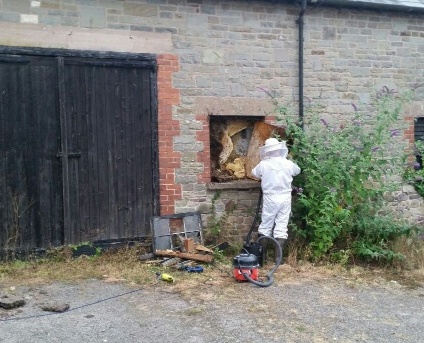
bees 4

From this point on, things went well. No more stings, in fact not even an attempt. It seemed that the bees were resigned to their fate, whatever that was. There were thousands of them, tens of thousands even. And among them was the one most important bee to capture intact – the queen.

bees 3

But how I was to locate her amongst all the others? I had no idea. If she was marked – an escapee from a ‘looked after’ colony – then I had a chance. I looked, searched, saw no sign. I simply had to keep hoovering and hope that she went into the ash can with her friends.

I saw drones – the males – and many nursery and forager bees but, by the time the can was full – after over an hour – I saw no queen.

By now, it was turning dark. I decided to call it a day, move the bees I had captured and the made up frames to their new home. A nice clean hive with new frames and a sugar syrup feeder to make sure they didn’t go hungry. I tipped them in, and crossed my fingers that they would stay until the morning when I could return to collect the others.

I was up early. Again, I met with a placid and non-aggressive colony.

bees 5

Vacuuming continued. Another can-full meant just a few remained.

I headed back to the new hive and was pleased to find that the original bunch were still in place. I lifted off the roof, tipped in their friends and stepped back to admire a job well done.

For the next week or so, I will now leave them undisturbed save for keeping their supply of sugar syrup feed topped up while they source local supplies of natural food. If all goes well, the worker bees will draw out the frames with comb and then the queen will start to lay eggs. Once that happens I will know that she is present and that the colony has fully accepted it’s new home.

And given that the alternative to eviction was a visit from the pest-controller, I think that a few stings and several hours of my time was a small price to pay to give the colony a chance to survive. I went back a third and a fourth time, to mop up stragglers, mostly foragers that had been in the fields at the time of my visit. In the end, I estimate that I had captured virtually all of them.

And who knows, next year I may well be rewarded with some honey.

Yesterday in London

One day in London. A powerful observation of one day in the life of the thin blue line. One day where only one of the attacks made the national press. Not surprisingly, it was the one that would attract the most media interest.

Terror on the streets – peace will return

Kill one … frighten a thousand

terror attack 2


– The number of terrorist attacks is increasing

 – terrorist attacks are more widespread

 – Europe is experiencing terrorism of a kind never before seen

 – New forms of terrorism motivated by religious imperatives are fundamentally different from terrorism of thirty years ago.

Modern perception, promoted and, arguably supported by what we read in the press and see through the media, but is it reality?

What is terrorism?

In simple terms, it is a technique that boils down to killing civilians in order to influence, shock, impress, provoke, coerce or harm relevant  third parties.

In legal terms, there is no internationally accepted definition of terrorism. One man’s terrorist is often seen as another man’s freedom fighter, for example.

What is a terrorist? A tough question to answer. Terror can come from the State, from a dictator or from a secret police. It can be undertaken by religious believers or atheists, left or right-wing political groups, vigilantes, death-squads, invading Armies or Governments.

And is terrorism a new phenomenon? Although we are experiencing a recent surge in religious terrorism, the mythology of most world religions is filled with violent images and bloody histories. For example, all three Abrahamic religions have experienced radical offshoots that have at some time promoted extreme interpretations of their beliefs and a resulting ‘holy war’ that included worldwide political objectives. The same can be said of non-Abrahamic religions such as Hinduism and Buddism.

terror attack 4

Terrorism is not new. It existed at the time of the crusades and during the tortures and abuses of the Inquisition. Genghis Khan and other Mongols used it as a tactic to overcome their enemies, as did the Roman Empire. In more recent times, invading German and Japanese Armies in WWII used terror to subjugate potentially resistant populations.

Marxists tried to divide human societies by class and propagate ‘class war’, Fascists used race to identify their enemy.

We now experience terrorism motivated by religion, dividing humankind into true Muslims on one hand and unbelievers (kafir) and heretics (takfir) on the other.

Kill ten … frighten a million.

Islamist Jihadi terrorism has become our main form of trans-national terrorism in the last ten to twenty years. But this does not mean that all Islamist movements include Jihad in their priorities – they do not. There are examples who abstain from any form of violence.

terror attack 5

Something in the modern world, perhaps globalisation, is unsettling many people and their search for a secure future is leading some to reject the modern world and to favour a violent solution to changing the threat that they perceive.

Kill a hundred … frighten a whole population.

So, what of the future? History tells us that all forms of terrorism will eventually fail. Current threats will fade and be replaced by new motivations and causes.

The current Islamic threat is new, because it is so transnational, involving myriad groups, and there is no specific grievance that can be addressed, nor any specific leadership with whom a negotiated solution can be found.

And despite the lessons of history, our leaders still appear surprised that military intervention in places like Iraq has proved ineffective without subsequent political solution and this has only led to increased violence.

Terrorism relies upon fear to succeed.

If we do not fear it, if we recognise that history teaches us a solution to this current wave will be found or it will simply fade with time, then it will fail, as it always has.

Time will heal. Peace will return.

terror attack 1


I believe that – I have to believe it – the alternative is far too catastrophic to contemplate.


Thoughts of an older voter

Today, the UK saw a result to the ‘Leave EU’ referendum that some predicted but none really expected.

The reaction to it has been frightening. Social media is awash with stories of families torn apart, arguments, and even fights. A senior politician who campaigned to leave the EU has been attacked by a mob.

Some of us simply sit back and smile. We’ve seen it all before.

I think many of us older peeps are more reflective and less reactive than the younger generation. We know, from life experience, that this can all change, economic separation from Europe may never happen, and so much of what goes on in the political world is just talk.

This vote may well act as a wake-up call to the political classes that they cannot just carry on doing what they think is best. It may – and I hope those that think this are right – just be the start of a brave new Europe and a brave new world. But it may not, and nothing may change in the long run, or it may change and then return to the way it was. Such is the way of things.

Why did people vote ‘leave’ in such large numbers, when the economic arguments were so against such a move? Some say is was the ‘immigration’ issue. I have a personal perception that people didn’t react to immigration so much as to the lack of investment by successive governments in infrastructure to support the growing population. By that, I mean the NHS, Education etc. By and large, we welcome new cultures but people (here in Wales) have become very angry as they see our support services in a state of collapse. If we had the infrastructure in place to accommodate those that choose to come and live here, there would be no NHS queues, no lack of school places, no lack of social housing. But there is, and free movement of EU citizens copped the blame, rather than the real cause which is the lack of long-term investment.

And I wonder if many voted ‘against’ what the political parties were recommending more than ‘for’ leaving the EU because they no longer trust people who they perceive as liars with their noses in the trough? Do politicians imagine that people have forgotten confidence shaking and well publicised events such as the expenses scandals and the decisions to award themselves inflation-busting pay rises, while promoting austerity for everyone else?

And, I think that our politicians have spent many years blaming EU government for problems in the UK, and this sank in so much that when they turned around at the last minute and said ‘EU is good’, people simply didn’t believe them.

But, like I said, my guess is that in a few years we will look back on today and wonder at how people reacted so vociferously to the result.

I’ve seen many governments come and go, I was around when the EU started up and I’ve seen it head off in a direction we didn’t expect. And I’ve seen the collapse of soviet Russia, East and West Germany re-united, the Northern Ireland Peace Process succeed and Scotland, Wales and NI achieving far greater independent control than used to be the case. All these things were deemed impossible once, and they all came to pass.

Today will one day be history, no more, no less. And we will look back on it and reflect. either on what we imagine could have been, or what happened as a result.

Crimefest16

A year ago, I had never heard of Bristol Crimefest so when my publisher asked me to attend and take part in a couple of interview panels, I really had no idea what I was signing up for.

I arrived at the Bristol Marriott hotel, checked in to a very comfortable room and then went to register for the festival. I’m sure you can imagine my surprise when I asked festival organiser how many people we coming. The answer? Five hundred and fifty! I think he saw my shocked look as he then reassured me that there would be know more than a hundred and fifty at each panel!

First evening was spent with fellow Orenda Authors when our wonderful publisher, Karen Sullivan, took us all out for a nice Italian meal. I had the chance to meet and talk to Michael Grothaus, Michael Stanley, Yusuf Toropov, Kati Hiekkapelto and Paul Hardisty.

Returning to the hotel, I began to notice faces that I recognised. Mari Hannah spoke to me (absolutely charming) and Rod Reynolds (looks so young). Then I saw an ‘old friend’ Michelle Davies, who I met in Glasgow in March when we did our very first interviews together. A great catch up was had.

And then it was time for bed!

Day one dawned. Breakfast – full english, of course – as you should always go into battle on a full stomach, and then off to meet the team for the first panel. Pete Adams (hilarious), Daniel Pembrey (young, talented AND handsome) and the wonderful Lisa Cutts. Lisa is a serving detective and – not a lot of people know – her father was my first DI (detective inspector). Lisa and I had spent the previous evening in the bar talking JOB, as coppers often do!

crimefest panel 4Lisa and I met up with our ‘moderator’ Caro Ramsey. Caro is from Glasgow and turned out to have a very sharp sense of humour. With another natural comedian in Pete Adams, it didn’t take long before they had our audience laughing. Lisa, Daniel and I simply followed where they led.
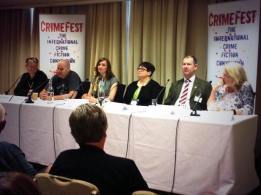

The hour passed very quickly, and then we headed off to sign a few books.

Then, a very strange thing happened. At 7pm I joined a large queue of people as we headed for the main hall. There were to be announcements, the Crime Writers Association were publishing the long-lists for the 2016 Dagger Awards. I was aware that my publisher had nominated Wicked Game but, well, let’s get real, there are hundreds of entries and some very talented and experienced authors in the mix. As the announcements started, I found myself chatting quietly to a lovely lady who turned out to be none other than Zoe Sharp. I wasn’t paying as much attention to the stage as perhaps I should have been (guilty m’lord) but I then thought I heard my own name being announced. Zoe confirmed it. A few moments later my hand was being squeezed by more people than I could count. Wicked Game had been long-listed, for the John Creasey New Blood Dagger, along with eight other entries. My publisher gave me a kiss, my phone started buzzing. I was stunned, and speechless.

That night, I celebrated with fish n chips and a cider, at the Catch22 resturant (very good, well recommended – try the grilled fish) opposite the hotel. I met Mick Heron (Spy novelist) and, as he was also listed for another Dagger, we celebrated together.

Next day, I was on the red-eye panel, the one that starts at 9am, the morning after some people were in the bar until the wee small hours. To my surprise, we had a full house again. This time we were under the guidance of Laura Wilson. On the panel were Sara Ward, Yusuf Toropov, Anja de Jager and a certain Mr James Law. James is a former submariner and the author of a big-selling book by the name of Tenacity.

crimefest panel 1

JS Law starts the banter…

Put an ex-navy man and an ex-soldier together and the inevitable happened. First he took the rise out of the Army, then I remembered a navy joke, and soon the craic was well under way. What the people outside the room must have thought of the laughter, I don’t know. What our fellow authors must have thought, I dread to think!


Soon came the time to head home. All too soon as I had made some great new mates and met some fascinating people. I was really quite amazed at how friendly and welcoming the crime-fiction community is.

And will I go next year? If they’ll have me, you bet. James Law and me might just start up a double act.

PTSD – a road to recovery

ptsd recovery road

In previous posts, I have written on how Writing helped me with PTSD and about the traumas that first triggered my symptoms.

Writing and talking to a sympathetic counsellor was a significant step on my road to recovery.

But what is recovery? Is PTSD curable, or is it something we just have to learn to live with?

ptsd pic

Recovery from PTSD doesn’t mean forgetting the trauma that triggered it.

What happened, happened, and that will not change. You were there, you remember, you will always remember.

The only part of the PTSD equation that can change is you.

Recovery does not mean cure. What is does mean is regaining control – control of your life.

ptsd distress

Making the first step is the hardest (courtesy of Sue Black Photos)

It means learning how not to have the debilitating emotional and physical reactions that have become part of your life.

It means learning about PTSD, what it is and why it effects you in the way that it does – Understanding brings strength.

It means learning to relax, to reduce stress levels and to sleep, and not just any type of sleep, I mean that quality, restful un-interrupted sleep that you used to enjoy before the dreams.

It means finding ways to ease your symptoms, such as ways to limit your reactions to trigger events.

It means regaining self-confidence and self-respect.

The journey

snakes ladders

For me, the road to recovery has been like the game of snakes and ladders.

But with some differences.

In the board game, you move forward, starting on square 1, to eventually aim to end the game at square 100. On the way, if you land on certain squares there will be a ladder to help you up or a snake that will send you further down the board. Some ladders are very helpful, others not so. Some snakes are a small setback, others much greater in effect.

The reality.

On the road to recovery you don’t know which ladders are going to help you or how far they will help you climb. At the point where you step on the rung, your upwards journey may be very short or even go nowhere, or it may be just the ladder you were seeking and end up taking you a long way forwards.

ptsd writing

Writing was my ladder

Similarly with the snakes. At first, on your journey, you cannot see them. They take you by surprise, shock you, and slip you very quickly towards where you started. But, as you experience the snakes, you get better at reacting to them. You learn how to jump off, so you don’t slide so far. And, as your recovery improves, you learn how to spot the snakes and how to step over them as you move onwards and upwards.

Winning the game.

Making effective progress means seeking help, and being brave enough to accept that you cannot do it on your own. It’s a long upward climb, a mountain, one that nobody should undertake on your own.

ptsd talking

Talking to a counsellor will help

To climb it, you’ll need equipment that’s up to the challenge and guidance from those that know how.

And to get that guidance, you’re going to need support. Not just the support of those close to you but professional support and peer support.

There are many sources of help, from Combat Stress through to the NHS, and many types of treatment.

Not all will work for you. We are all different, with different trauma, different memories and different symptoms. And we all respond individually to the range of treatments available.

Writing was my ladder.

Go find yours.

PTSD – let it be a mountain that you turned into a molehill.


My first Blog…I am still a Detective, not Defective!

Excellent post on depression, what it does to you and how those around you can help

boomicony's avatarboomicony

It has occurred to me, that my first blog I wrote in 2014is not on here, so as it hada pretty positive reactionand practicallyhas beenlife changing for me, it is only right that I put it on here.

I would also like to say thank you so muchto everyone who liked it and shared it since, it has given me confidence to carry on writing.

I am still a Detective, not Defective!

I am a detective constable with 24 years service. I recently had a breakdown and subsequently was diagnosed with depression.

This was caused by too much stress over a long period of time.

I am writing this because I feel one of the last taboos is talking about being in the police and recovering from this type of illness.

I want to help others understand more about stress and depression, how they can spot it in others and…

View original post 2,449 more words

Why I started writing


A reason to write.


Matt Johnson.


I’ve spoken many times on how a form of therapy that included writing helped with my treatment for PTSD.

And I’ve explained that it was a comment made by my counsellor that first planted the idea in my mind that I might write a book.

What I’ve never explained is why I agreed with the suggestion to the degree that I was sufficiently motivated to go along with the suggestion.

To explain, I need to take you back to 1985. I was a PC in those days, and had just passed the promotion examination to become a sergeant. I was posted to Tottenham and Hornsey police stations for a short period to work as an ‘acting sergeant’ while I waited to go on my pre-promotion course at Hendon police college.

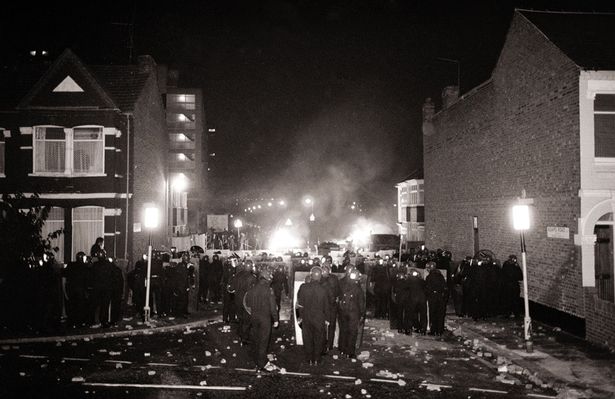
On my first evening at Tottenham, a young black lad came running in from the street, screaming and shouting. He jumped over the front counter towards me and collapsed in a heap on the floor. I moved towards him and saw blood, a lot of blood spreading out on the floor around him. He had been stabbed and had run into the police station to escape his attacker. This was my first introduction to Tottenham in the 1980s.

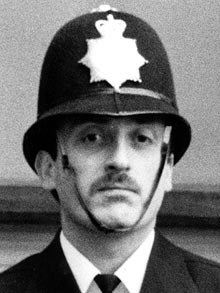
I also spent some time at Hornsea Police station where I met a sergeant called David Pengelly. David gave me some tips about the job and about what to expect on my sergeants course. He introduced me to some of his community beat officers, we called them ‘homebeats’ in those days, including PCs Keith Blakelock and Richard Coombes.

Brosdwater5

I left Tottenham when my course started. As I did so, I was aware that trouble was brewing in the local area. Mobile car patrols had been stopped on certain estates and foot patrolling in those area was only being done by well-known local PCs and, even then, they were always in pairs. There had been some sporadic outbreaks of hostility towards police officers and some vehicles had been damaged by stone-throwing youths. It seemed that the area was a powder keg just waiting to explode.

On 5th October 1985, the Broadwater Farm riots started. David Pengelly, the sergeant who had befriended me at Hornsey, was deployed with several of his homebeat officers into the fray. They were ill-prepared, inadequately equipped and completely unaware of what they were going into.

HOFFMAN_bw-archive_082
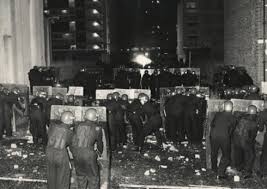
Police during rioting on the Broadwater Estate in which PC Blakelock would be killed.

That evening, in the darkness and confusion on an estate they were unfamiliar with, they were stoned, petrol bombed and, eventually their position was over-run and they were isolated. They ran for their lives. Keith Blakelock slipped on wet grass, fell to the ground and was set upon by the rioters. He was killed, stabbed and hacked to death. Showing immense bravery and armed with ridiculously inadequate wooden truncheons, PC Coombes and others attempted to rescue PC Blakelock while Sergeant Pengelly fought alone with the rioters to try and buy some time for his colleagues.

David Pengelly was awarded the George Medal for his bravery that evening.

Broadwater2

But there were many other police officers at Broadwater Farm that night. As with the officers from Hornsey, they were also ill prepared for what they faced. Many were injured, all were traumatised.

Some of them were from Barnet police station, where I was posted on promotion. In the aftermath of the riot, an enquiry team was set up and all officers who had been present were told to write statements including as much information as they could about what had happened to them, what they had seen and any evidence they could include to help bring rioters to justice.

Broadwater 1

In many cases, the statements produced by the officers from my station were woefully inadequate. Often they said no more than “I went with my serial to an estate in Tottenham. We stood behind plastic shields while hundreds of people tried to kill us with petrol bombs, knives and rocks.”

I was given the job of obtaining better statements from these officers. It wasn’t easy. Many of them were resentful, angry and upset by what they had been through. Many simply didn’t want to talk about it, let alone write a statement.

I remember one particular PC, I’ll call him Andy. Andy was in his early twenties. In the months that followed the riot, Andy steadfastly refused to write a full statement. He was interviewed by senior officers and even threatened with disciplinary action but nothing could persuade him. He was thought of as a bad egg, not a good police officer. He had started drinking, often to excess and was regularly late turning up for work. He seemed to have an ‘attitude problem’ was insubordinate to senior officers and surly. One day, he was arrested for drink-driving. He was disciplined and sacked. Nobody missed him.

Broadwater 7.jpg

I forgot about Andy until many years later. I was undergoing counselling for PTSD and I began to realise that young Andy, and many of the PCs who had been at Broadwater Farm had been displaying similar symptoms to my own. I hadn’t recognised it at the time, indeed I had never heard of PTSD.

Nothing was done for them by way of counselling or post-trauma care. They were simply left to fend for themselves.

It was too late to help Andy, but I was left thinking ‘if only I had known, if only I had been aware, maybe I could have helped him’. I felt guilt as I knew that I had failed him, as had the organisation I worked for, when we allowed his behaviour to deteriorate to the point where he was arrested and kicked out of the police.

Broadwater 6

I promised myself then that I would do my level best to make amends for my failure. So, when my counsellor suggested the idea of a book, it sparked an idea. An idea that one day I might write a book that could educate and inform people about PTSD and about how it affects people’s lives.

But I knew that as one individual former soldier and police inspector, I had neither the power or the influence to bring about change, to ensure that all men and women in all the armed and emergency services are prepared for the trauma they will face and properly supported when they do. But, it occurred to me that what I might be able to do is introduce people who can influence change to the realities of PTSD, through the medium of creative writing.

And so… I began to write. And ‘Wicked Game’ was born.