Mysterious surge in sales – Matt Johnson

Like many readers, I love a good mystery.

I like to enjoy the story and, at the same time, try to spot the clues, see the twists and out-think the writer. More often than not I fail.

I now have my own little mystery to solve.

Having published Wicked Game as an indie novel two years ago, I have casually monitored sales and have become accustomed to the book ticking over to the tune of about a hundred per month.

Towards the end of November 2014, UK sales started to increase dramatically, to the point where, in the first four days of December, there have been over 100 downloads from Amazon UK.

The surge isn’t the same in any other country, just the UK.

Why, I ask? I haven’t done anything particular to market the book in the last few months, indeed I have been wrapped up in getting the sequel finished.

I’ve googled the title, googled me, checked Amazon promotions and even emailed Amazon to try and find out why. All without providing an answer.

I did learn that WG is now approved reading for schools on the Orkney Islands, though. That was news and I also found a couple of blogs where WG had been given a nice review. None of these seemed to be key to producing a surge for November, though.

One clever person suggested it might be due to the release of a single in the UK called ‘Wicked Games’ but I have to ask myself, would someone searching for this single happen to stumble upon my book and then buy it? Another suggested a link to Xmas, but these are kindle downloads, not paperbacks, although the paperback version has seen a small sales increase.

So, for now, I will have to keep wondering, scratch my head and smile every time I check the kindle sales reports. Long may it last.

Matt Johnson Book review – Shell shock; The Diary of Tommy Atkins

Shell Shock by Neil Blower

Image

Published by Firestep Press

£1 from each sale is donated to the UK Military PTSD charity, Combat Stress.


oh, but it’s Tommy this and Tommy that

and ‘Chuck him out, the brute.’

But it’s ‘saviour of his country’

when the guns begin to shoot.

Rudyard Kipling 1892.

‘Tommy Atkins’ is a slang expression used to describe an ordinary soldier in the British Army.

Although mostly associated with the First World War where German soldiers would call ‘Tommy’ across no man’s land to speak to the British soldiers, it is a nickname that has been in use for many centuries.

It is widely believed that the name originated in 1794 when the Duke of Wellington spoke to a mortally wounded Private Thomas Atkins who described the fierce engagement of the day as “It’s all right sir, it’s all in a days work.”

The words used by Rudyard Kipling to describe Tommy are very appropriate in that he highlights the fact that these young men are those that the nation turns to in times of conflict. They are the same young men that can be a nuisance in the pub on a Saturday night and yet, when called upon to fight for their country, are prepared to give their lives in order that their fellow citizens may enjoy freedom from tyranny.

Sometimes, as described in this book, the effect on those young men can be so devastating that it inhibits their ability to adjust to post military life.

‘Shell Shock’ is introduced by Colonel Tim Collins. OC of the Royal Irish Regiment, Tim Collins gave a speech to his soldiers before the 2003 Iraq war which is often quoted and used as an example of how to deliver an inspirational speech. This is an excerpt.
We go to Iraq to liberate not to conquer. We will not fly our flags in their country. We are entering Iraq to free a people and the only flag which will be flown in that ancient land is their own. Show respect for them.There are some who are alive at this moment who will not be alive shortly. Those who do not wish to go on that journey, we will not send. As for the others I expect you to rock their world. Wipe them out if that is what they choose. But if you are ferocious in battle remember to be magnanimous in victory.

Iraq is steeped in history. It is the site of the Garden of Eden, of the Great Flood and the birthplace of Abraham. Tread lightly there. You will see things that no man could pay to see and you will have to go a long way to find a more decent, generous and upright people than the Iraqis. You will be embarrassed by their hospitality even though they have nothing. Don’t treat them as refugees for they are in their own country. Their children will be poor, in years to come they will know that the light of liberation in their lives was brought by you.

If there are casualties of war then remember that when they woke up and got dressed in the morning they did not plan to die this day. Allow them dignity in death. Bury them properly and mark their graves.

It is my foremost intention to bring every single one of you out alive but there may be people among us who will not see the end of this campaign. We will put them in their sleeping bags and send them back. There will be no time for sorrow.

The enemy should be in no doubt that we are his nemesis and that we are bringing about his rightful destruction. There are many regional commanders who have stains on their souls and they are stoking the fires of hell for Saddam. He and his forces will be destroyed by this coalition for what they have done. As they die they will know their deeds have brought them to this place. Show them no pity.

It is a big step to take another human life. It is not to be done lightly. I know of men who have taken life needlessly in other conflicts, I can assure you they live with the Mark of Cain upon them. If someone surrenders to you then remember they have that right in international law and ensure that one day they go home to their family.

The ones who wish to fight, well, we aim to please.

If you harm the regiment or its history by over-enthusiasm in killing or in cowardice, know it is your family who will suffer. You will be shunned unless your conduct is of the highest for your deeds will follow you down through history. We will bring shame on neither our uniform or our nation.

Regarding the use by Saddam of chemical or biological weapons, it is not a question of if, it’s a question of when. We know he has already devolved the decision to lower commanders, and that means he has already taken the decision himself. If we survive the first strike ,we will survive the attack.

As for ourselves, let’s bring everyone home and leave Iraq a better place for us having been there.


As with Col Collins speech, I found ‘Shell Shock’ to be a really powerful read. It stirred up emotions, made me laugh, made me cry. I had to put it down a couple of times as I found my emotional reaction overwhelming.
It isn’t a long book, it took me two hours to read it, but it is a very powerful tale of a soldier, recently returned from a theatre of war who is struggling to adapt to the comparative routine of civilian life.
Shell Shock’ is an original idea, well written and joins my personal list of favourite books. It takes the form of a diary, written by the anonymous soldier and edited by the author. You join Tommy Atkins just as he leaves the Army. He is receiving treatment for Post Traumatic Stress and he writes of his experiences with the Health Service and his family as he struggles to cope with his worsening condition.
Tommy goes home to his bickering parents and to a girlfriend, Shell, who adores him and is glad to have him back. As previously mentioned, the novel takes the form of a diary. Tommy chronicles his every day experiences – his attempts to find employment, his working relationships, his relationship with Shell, and with his parents, the ups and downs that gradually become overwhelming.
I recommend this as a book to buy. If you have any interest at all in the military, PTSD or in the way that stress affects family life, you will enjoy it. It will also open your eyes to the problems that many of young servicemen and women will be experiencing as they return from Iraq and Afghanistan.


Reviewers to the Slaughter

Following my recent blog on how books are appearing in best-seller listings following the purchase and mutual exchange of good reviews, this article by Mercia McMahon is another example of how people are even forming review groups to promote each others work. Such reviews con the genuine reader and, long-term the writer/author is only fooling themselves. Readers cant be fooled for long and will show their feelings if they believe they have been scammed.

PTSD – how writing worked for me by Matt Johnson

It has quite surprised me how many people are now trying out writing as a contributory means to help treat PTSD, post traumatic stress disorder. Questions levelled at me, as to how writing helped me, have prompted me to repeat this post, which I originally published last year.

PTSD – the chemistry

In examining PTSD, one of the known factors is that an instance of overwhelming terror can alter the chemistry of the brain, making people more sensitive to adrenaline surges even decades later.

This sensitivity to adrenaline surges is a major factor in post-traumatic stress disorder, in which people can experience normal events as repetitions of the original trauma.  PTSD affects combat veterans, crime victims and millions of others. Its cause has biological basis in its affect on the brain.

New studies in animals and humans suggest that specific sites in the brain undergo these changes. Scientists say the findings may allow development of medications to blunt the biological changes present in post-traumatic stress disorder.

For the brain changes to occur, scientists now say that people usually have to experience the stress as catastrophic, an overwhelming threat to life or safety and one over which they have no control. Less severe stresses, such as the death of a loved one or relentless financial problems, do not seem to trigger the biological changes.

When I started  receiving counselling, it was explained to me like this.

When you are working in a high stress environment such as a war zone or any work where you are subject to regular, frequent and high adrenalin surges the brain is slowly, cumulatively, affected by this regular level of adrenalin in the body. Whilst adrenalin is an incredible aid in the preparation for and enactment of the flight and fight response, it has a side effect in that it ‘eats up’ a chemical called serotonin.

Serotonin is a naturally produced chemical that works in the body as a neuro-transmitter. It is widely thought to be a contributor to feelings of well being and happiness. What is does is smoothly transmit thought processes so that the brain operates in an organised and structured way.  Serotonin also has some cognitive functions, including memory and learning. It’s presence in the body is essential to the regulation of mood, appetite and sleep.

So, when exposure to a work environment or a series of events causes the body to regularly produce adrenalin, the effect is that serotonin levels drop.

As a result, the brain starts to operate less efficiently. Thought processes become less clear, sleep is interrupted, memory confused etc.

Then a major catastrophic event causes a massive adrenalin surge.

PTSD symptoms

I wonder how many people reading this will have heard of PTSD and wondered exactly how victims are affected? How many will have seen veterans talking on TV about experiences and see that brave people become emotional and unable to talk any further, the surge in feelings overcoming their ability to talk.

In fact, symptoms are far more wide ranging than most people realise and can vary widely between individuals. They may develop during the first month after a person witnesses a traumatic event. However, in many  of cases there may be a delay of months or even years before symptoms start to appear.

This is a summary, it is not exclusive, as I am not an expert.

A person with PTSD will often relive the traumatic event through nightmares and flashbacks, and have feelings of isolation, irritability and guilt.

Problems sleeping and find concentrating difficult. The symptoms are often severe and persistent enough to have a significant impact on the person’s day-to-day life.

Some people with PTSD experience long periods when their symptoms are less noticeable. This is known as symptom remission. These periods are often followed by an increase in symptoms. Other people with PTSD have severe symptoms that are constant.

Re-experiencing is the most typical and widely publicised symptom of PTSD.

A victim may involuntarily and vividly relive the traumatic event in the form of flashbacks, nightmares or repetitive and distressing images or sensations. Being reminded of the traumatic event (the trigger) can evoke distressing memories and cause considerable anguish.

Trying to avoid being reminded of the traumatic event is another key symptom of PTSD.

Reminders (triggers) can take the form of people, situations or circumstances that resemble or are associated with the event.

Many victims of PTSD will try to push memories of the event out of their mind. They do not like thinking or talking about the event or events in detail. Think of those WWII veterans who well up when being interviewed for documentaries, a display of emotion repeated by Iraq and Afghan veterans who appear to talk about their experiences in more recent programmes.

Some victims repeatedly ask themselves questions that prevent them from coming to terms with the event. For example, they may wonder why the event happened to them and whether it could have been prevented. Often, they may blame themselves and many feel guilt that they survived when others didn’t.

Someone with PTSD may be very anxious and find it difficult to relax. They may be constantly aware of threats and easily startled. This state of mind is known as hyperarousal. Irritability and anger may be a clear indication of this arousal state.

Some victims try to dampen down their feelings by trying not to feel anything at all. If you know an ex-cop or a veteran who you might describe as a ‘cold fish’ then what they may be showing is emotional numbing, a way of coping.

Someone with PTSD can often seem deep in thought and withdrawn. They may also give up pursuing the activities that they used to enjoy.

Other possible symptoms of PTSD include depression, anxiety and phobias. Drug and alcohol misuse are common as a means to dealing with the symptoms expreienced.

PTSD often  leads to the breakdown of relationships and causes work-related problem.

Surprised at the range of symptoms? Imagine trying to cope with them and you will have a handle on the challenges facing victims.

Writing

Many victims, me included find that counselling helps them to understand what is going on within their own minds and bodies. It helps to appreciate how a simple chemical imbalance in the brain has been triggered and how the physical and psychological effects that follow are a result of that imbalance.

But counselling doesn’t fix the symptoms on it’s own. Anti depressants are a great help and they worked for me. The pills help the body restore chemical balance so that the brain can then start to regain control.

For me, writing started as a way of helping the counselling. Like many victims, I became emotional when prompted to talk about experiences and describe what had caused the PTSD in the first place. Like many, I was advised not to worry and to try and make notes to bring back to counselling session that I could use to refer to and which might help the counsellor to help me. I made the notes at times when I felt up to it, writing down what had happened, how I had felt, how it had affected me. I recorded dreams that I had, flashbacks and imaginary. Over the weeks and months I found that writing things down helped my brain to get things focussed, to get my thoughts back in order and to regain structure and control.

When asked how it helped, I describe it like this. Before the writing, my brain felt a bit like a fragmented hard disk. Lots of data, confused, hard to join up and recall. Thought processes were slow, decision making was poor. After writing, it was like a PC de-fragment, where the information/memory is more organised and easier to use. It works more quickly and efficiently, thereby reducing frustration and making life easier.

Also, consider the analogy of a PC screen with too many tabs open to really use any of them effectively. After writing/counselling I was able to close down many of the tabs and focus on the relevant. Memories and distractions were filed away enabling me to concentrate on the here and the now.

It helped immensely.

And had an unexpected benefit when my counsellor was moved to comment on how much she enjoyed my writing.

So, one day I followed her advice again and started to weave the notes jotted down into a novel. The more I wrote the better I felt. There were several dips, several times when I found myself reliving things in a way that I preferred to avoid, but, despite the low points, the overall direction was onwards and upwards.

PTSD affects people in many ways, so what works for one will not necessarily work for another, but the fact that so many people have had such enjoyment out of reading a book that came about in such an unexpected way has given me immense reward. People have contacted me, some have described me as inspiring. That may be. What I can say is that the feedback has inspired me to carry on writing and we’ll just see if it continues to help keep the demons at bay. Not just for me, but also for the many others that have and will experience the nightmare as well.
Oscar Pistorius – guilty as hell

I have, like many people, been following the developments and questioning in the Pistorius trial.

Image

Several times, I have asked myself and discussed with friends why we find it so gripping.

In my opinion, its not simply a case of celebrity fascination. We are not watching the trial because Oscar is well-known, we are watching it because of what it is – a murder trial.

How many of us would have tuned in to watch a locally based murder trial if it had been available to view on television. Quite a few, I would imagine? We love to look at evidence, see testimony, make judgements, listen to clever lines of questioning and the answers given by witnesses and the accused.

In much the same way as we enjoy dissecting a crime novel, we look for clues, assess evidence, try to weigh up red herrings and then form an opinion as to either ‘whodunnit’ or whether the accused is guilty as charged.

In the case of Pistorius, that’s just what I have done. I’ve assessed his behaviour, the physical evidence and, amongst other things, the explanations he has given for how he came to open fire both when he shot Reeva and on other times when he has carelessly fired a pistol.

As the trial progresses, I’ve formed an opinion, just as a juror would, and this, I would argue, is the reason that we find the coverage to fascinating. We all put ourselves in the position of a juror, and we all form an opinion on his guilt or innocence. We are all going to be glued to the verdict to see if the Judge agrees with us, or not.

For me, so far, I think he is guilty. I think he lost self-control during an argument, lost his temper, fired in anger and then, instantly regretted what he had done. I think that Reeva ran from him in fear and that she was in the toilet as a place where she felt, temporarily safe. He came after her, tried to batter down the door and, as his loss-of-control increased, he returned with his gun. He then fired in temper, completely disregarding the danger and risk to Reeva as she sat on the toilet.

Much of his upset is, I believe, genuine. I believe he is genuinely distraught at what he has done, perhaps for what he did to Reeva, or possibly at what he has done to himself. But that doesn’t negate the fact that he shot her in anger. I think the idea of an intruder came to him in panic, as an excuse to try and avoid blame. Not an unusual reaction for someone who has done wrong, but in this case it is so blatantly improbable that I cannot conceive of how people might believe the story.

oscar2

The trial continues…


Murder of WPC Yvonne Fletcher – 30th Anniversary – Matt Johnson

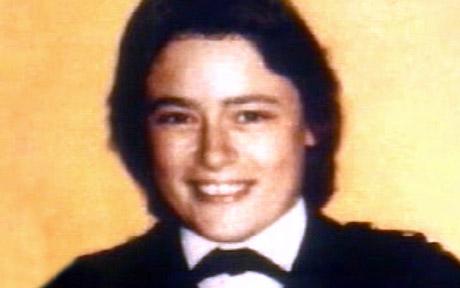
Today is the 30th anniversary of one of the worst days I have ever experienced. It is a day when a friend and colleague was shot to death. 30 years on, despite the identity of the killer being known, he remains a free man.

On 17th April 1984 I was a 27 year old advanced car driver working in central London on a police traffic car.

On 17th April 1984, my friend WPC Yvonne Fletcher was a 25 year old officer on the Vice Squad at West End Central Police Station. My wife of the time served on this same squad.

Image

Yvonne had been at a party at my home a few weeks before this. My last memory of her is of seeing her sitting at the bottom of the stairs in my house, looking like she had enjoyed a good evening.

At 10.18 am Yvonne was with a small contingent of officers supervising a demonstration outside the Libyan Peoples Bureau in St James Square, London. Her fiancé was among the officers with her. Yvonne had her back to the Bureau.

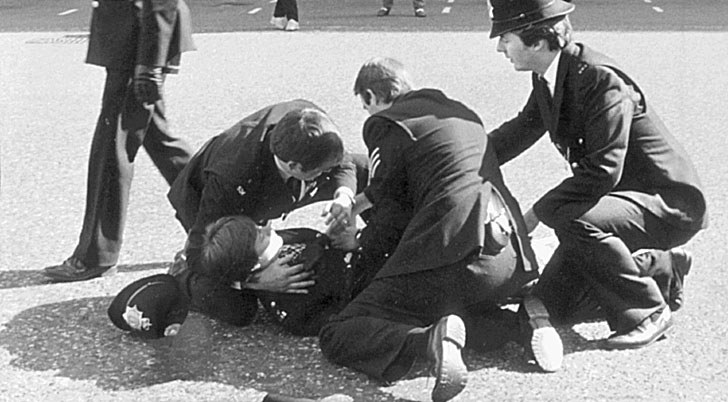
Without warning, someone in the Libyan bureau fired a Sterling submachine gun into the group of protesters and police officers. Eleven people were hit by bullets, including Yvonne.

This a video of the demonstration and the immediate aftermath of the shooting.

http://www.youtube.com/watch?v=vdg0BGzKCmc

Image

One of the uniformed officers trying to help Yvonne is her fiancé.

An ambulance was quickly sent to the scene and my patrol car was sent to escort the ambulance to the Westminster Hospital.

Anyone who has worked in central London will know just how quickly a major incident can cause the streets to become blocked. Main roads rapidly snarl up and the side streets and rat runs that the taxis and locals use, soon follow. Gridlock is the result.

Getting the ambulance to the hospital proved to be a nightmare. We were forced to drive onto pavements and, on several occasions, we had to get out of the car to get vehicles moved so we could get through. At that time we were aware that the casualty was a police officer, but didn’t know who.

I remember that the ambulance overtook the police car just before we reached the hospital. We had to get out of the car to clear traffic from a junction and the crew seized the opportunity to make progress and get through. When we pulled in behind the ambulance, Yvonne had already been taken into the emergency area. I remember seeing the fantastic efforts and the work that was being put in by the nursing staff to help her. They were fantastic and couldn’t have tried harder.

Yvonne died from her wounds one hour later. She had been shot in the back and abdomen.

After escorting the ambulance, my car was sent to help with the traffic chaos that followed the start of the resulting siege.

I went home that afternoon and switched on the six o’clock news. It was only then that my former wife and I learned that the murdered officer was our friend.

In the days that followed I was assigned as a driver to the SAS team that had been brought in and stationed at a nearby RAF base. My job was to run them around, in short I was a gofer and taxi driver. Notwithstanding the final result of the siege, I have every confidence that had those soldiers been given the order to storm the Bureau, that the action would have been over very quickly. I made frequent trips to the infamous ‘blue screen’ that was built to block the view into the square and I was present on the night that something amazing happened.

Yvonne’s hat and four other officers’ helmets were left lying in the square during the siege of the embassy. Images of them were shown repeatedly in the British media. They came to represent something quite iconic as a symbol of unarmed police officers who had been attacked so ruthlessly.

What happened was that a PC, acting completely on his own, ran into the square and snatched Yvonne’s hat. There were shouts of ‘get back, get back’ from the firearms officers but the unarmed PC was determined and fast. As he returned to the blue screen, he was bundled away by a senior officer and a firearms officer. I never did find out what happened to the PC but I suspect he got into trouble.

Image

Fact is, what he did was a reckless thing to do. It is quite possible that the hat may have been playing a part in the hostage negotiations that were going on behind the scenes. We will never know. But what I can tell you is how much that PCs actions lifted the spirits of people like me who were sitting watching while the ‘powers that be’ seemed to be doing very little. Grabbing Yvonne’s hat from under the noses of the terrorists stuck two fingers up to them and told them what we thought of them.

To that anonymous PC, I say thanks.

The ‘Peoples Bureau’ was surrounded by armed police for eleven days, in one of the longest police sieges in London’s history. Meanwhile, in Libya, Colonel Gaddafi claimed that the embassy was under attack from British forces, and Libyan soldiers surrounded the British Embassy in Tripoli.

No satisfactory conclusion was reached in the UK, and following the taking of six hostages in Tripoli, the occupiers of the Bureau were allowed to fly out of the UK. The Tripoli hostages were not released for several months, ironically almost on the exact day that the memorial to Yvonne Fletcher was unveiled.

In July 2012 Andrew Gilligan of The Sunday Telegraph received reliable reports that Salah Eddin Khalifa, a pro-Gaddafi student, fired the fatal shot. Unlike a previous suspect named as the killer, Mr Khalifa is known to be alive and may, one day, be arrested. He is currently living in Cairo, a city to which he moved as the Gaddafi regime crumbled.

So today, please spread the word to remind people that Yvonne’s death is still the only murder of a British cop on UK soil to remain unsolved.

And let’s remind Salah Eddin Khalifa that we haven’t forgotten.

Image

Follow Your Destiny

Echo the sentiments in this excellent blog by Sherry

Porch Philosophy's avatarFront Porch Politics

image

There comes a time in your life when you realize that if you stand still, you will remain at this point forever. You realize that if you fall down and stay down, life will pass you by. Life’s circumstances are not always what you might like. The pattern of life does not necessarily go as you plan or want.

Beyond any understanding, you may at times be led in different directions than you ever imagined, dreamed or desired. Yet if you had never put any effort into choosing a path or trying to carry out your dream, then perhaps you would have no direction at all.

Rather than wondering about or questioning the direction your life has taken, accept the fact that there is a path before you now. Shake off the “what if’s”, and rid yourself of confusion. Whatever is – is what’s important. Your past is a brief…

View original post 105 more words

Cheating the reader – by Matt Johnson

Back in the traditional days of publishing, many writers viewed self-publishing as the option of last resort. To an extent, self-published authors were unfairly regarded as second-rate because they couldn’t find an agent or sell their book to a big publisher. They were ridiculed as “vanity” authors.

We don’t hear much of that anymore. Self-publishing is finally earning the respect it deserves. High-profile indie author successes are climbing the best seller charts. Their commercial success is changing perceptions about self-publishing one reader at a time.

I looked at the best-seller lists this week, to try and pick up some ideas. Three authors I noticed, were indies. Incredible, you might think? Well done to them.

But, on checking the details of the books, something didn’t look kosher. Huge (and I mean huge) numbers of 5* reviews, fantastic sales but all three had a very significant number of critical reviews.

“If your book is poorly-conceived or poorly-edited, readers will reject it,” I have always been told. Most of the critical reviews mention things like a poor plot, weak characters, bad editing and poor writing. The 5* reviews say the opposite.

Most of the ‘how to’ advice tells us that ninety percent of your book’s success will be determined by its quality. The other ten percent is distribution, marketing and luck. We are told that if we remember nothing else we should remember that the very most important marketing you can do is to write a great book that markets itself on the wings of reader.

“Pretty good” isn’t good enough if you want to spark word of mouth.

And yet, here we are seeing, what appear to be poorly written books in the top ten best-selling list.

How can this be?

All three indie books I looked at had many hundreds of 5* reviews and less, but a rather high number, of very critical reviews. They had many more reviews than any of the well-known authors like Lee Child, Patterson and Baldacci, and I mean a lot more!

I looked at the 5* and 4* reviews and, in particular, some of the reviews from ‘top’ reviewers. What I noticed was that many of these reviewers write quite comprehensive reviews upwards of two or three times a day, and almost exclusively on indie written novels, from a wide range of genres.

Such an incredible appetite for reading amazes me, and such eclectic taste as well?

A lot of the great reviews were also very similar and rather more than one might expect to see from a reader. They read more like you would expect to see from a critic. Could it be that they are paid for? I might add that it did seem that almost every book these people review earns 5*, with a few 4* reviews here and there.

The critical reviews seemed to follow a common theme, with many readers reporting disappointment and a sense of having been tricked by the 5* reviews. Many were written in a way that seeks to warn others away from making the same mistake.

I then took a look at the author’s twitter pages. No clues here, all were pretty ordinary, but they did seem to have a lot of followers. So, I used a programme to look at their followers. In one case, with an author who’s first novel has over 1000 5* reviews, I found that the vast majority of his followers were either bots (automated/not actually people) or fellow indie authors. Very few were readers.

Like many of you, I have read the stories of how it is possible to buy 5* reviews, indeed I have had several tweets and emails offering them for sale. I have been offered facebook likes and followers, and twitter followers (thousands) if I would just pay for the privilege. I’ve always ignored these, as I imagine most indie authors do.

If you buy twitter followers, does it give an impression of success, and how many people are going to check to see if the followers are actually bots?

I’ve also ignored the large number of indie authors who have contacted me asking me to do a 5* review ‘exchange’. I post for them, they post for me. No, thanks.

Smashwords, and its founder Mark Coker, tell me that they have over eighty thousand independent authors registered with them. No doubt, the vast majority of these authors share the morale high ground and will not enter into dishonest practices.

But, if that’s an indication of how many indie authors there are in the World, it doesn’t take too many of them to be involved in review exchanges to see that you could quickly build up a false picture as to the quality of a book.

Not all, it seems, are playing the game fairly. And it seems to work. I now have no doubt that indie author books are appearing in the best-seller lists which have entered those lists thanks to the author knowing how to influence the retailer algorithms or, in old-school terms, to cheat.

Cheating gives all us indies a bad name. All those buyers that are taken in by the wonderful (purchased) reviews will feel let down and their trust in the review system will lessen. In line with this, they will feel less likely to trust that the work of indie authors is worth reading. You can’t con people too many times before they start to react.

These authors are generating sales, making money and laughing all the way to the bank. It won’t last, they are not building a readership as the people who buy their work will not return to buy again. But in the mean time, all us indies get a bad name.

Damn them.

Matt Johnson on ‘Getting noticed’, the seedy side of social media

As an indie author, getting noticed amongst the huge pool of talent that exists in the social media world is an incredible challenge. If there were an easy way, we would all be doing it.

Only yesterday, I read a tweet from a fellow independent author asking to people to do an ‘exchange review’ with him. What he was offering was a ‘quid pro quo’, ‘you scratch my back…’ type arrangement.  I’ve had a few similar requests myself, normally by DM, and I always decline. It was the first time I had seen an author being so public about courting such a favour.

I was so tempted to contact him and tell him not to get into that ball-game, but then decided that it was, really, none of my business. If he wants to, that’s up to him, but it’s not an avenue I would ever go down.

My personal feeling is that any means to secure reviews other than through genuine readers is fraught with danger. Sure, you may get a few lovely things said about your book, but it’s not genuine feedback is it? It’s not going to give you any idea as to whether your writing actually appeals to book readers and, surely, that is the purpose of a review.

Some authors argue that reviews are a way of getting noticed, an aid to securing that elusive book deal.  I guess that the argument is that publishing editors, on seeing a large number of excellent reviews on a book will then be tempted to take a look at it. That assumes, of course, that editors don’t know how the review system can be manipulated, that they don’t hear that companies are selling 5* reviews and that authors do review exchanges to boost their ratings. The truth is, of course, that they do, and they look at reviews with a very sceptical eye.

What happens after the initial rush of 5* reviews? What happens when genuine reviewers start posting what they think of your work? You can be very sure that if they feel they have been conned that they will say so. So, if your bought or exchange reviews create a false impression of the standard of your work, then you’d best be prepared for the backlash.

The same applies to followers on twitter and ‘likes’ on facebook. I have a healthy ‘followship, not outstanding, but each and every one of my followers is a genuine person, I think! I tend to followback and also follow readers to see what books they are talking about. It also enables me to talk to readers, secure feedback and see if my own work is heading in the right direction.

Like many, I have had my share of unwanted messages offering me opportunities to buy new followers. I can understand why a struggling author might be tempted, it can create an artificial appearance of status which may encourage genuine twitter users to take an interest in you. I was looking at the followship of a well-known author recently who is one of the top in my chosen genre. I saw that most of his original followers were ‘bots’, so he too had fallen for the offer.  Given that this same author has a name for creating fake profiles to promote his own work and attack others, I had to ask myself, is he right? Is this vanity, or is it good marketing? Not an easy question to answer. Books are a business after all.

Sometimes, I look at the twitter pages of fellow authors, newly established indies like me, who have yet to break into mainstream. I see that some of them have tens of thousands of followers and I ask myself, how? How is it that someone with that large a fanbase has not been snapped up by an agent and publisher?

Just yesterday I received this unsolicited email…

Hello xxxx

I am called  Harry. I also specialise in  Facebook and Twitter management helping to generate more customers  and also give your Twitter page  the wow factor.

 Our daily newsletter consists  of nearly  500,000 people whom have all completed a lifestyle survey , so we have a ideal  indication of what interests our customers . When someone submits an order through us unlike most of our competitors, We then submit your link through our newsletter  and in turn people then like your page. We do not use robots or fake likes.

 Prices from :-

£50 for 2,000 Facebook Likes

£50 for 6,000 Instagram followers

£45 for 7,000 Twitter followers

£50 for 30,000 YouTube Views

If a new visitor  logs on to your Facebook page  and can see that you have 7000 likes compared to your competition with just 350 likes, they tend to side with you even without considering price differences, as they are added  with confidence. This will also increase your position  through Facebook and start to drive organic  traffic through your page and through google.

We always have special offers, currently we have buy 20,000 Facebook likes for £170 get 5,000 Free Twitter followers Samples are available for serious buyers.

Many Thanks,

 Harry

Well, Harry. I’m sorry to disappoint you, but the answer is a very definite, no.

It did answer my question, though.

Humour in age

Yesterday my daughter e-mailed me again asking why I didn’t do something useful with my time. Like sitting at home writing a book is not a good thing. Talking about my “doing something useful” seems to be her favourite topic of conversation. She was “only thinking of me” and even suggested I go down to the village hall or the library and hang out with the folks there.

I did this and when I got home last night I decided to show her that I had learned one or two things in life to help keep myself busy.
I e-mailed her and told her that I had joined a parachute club.

She replied, “Are you crazy? You are in your fifties, and now you’re going to start jumping out of perfectly good planes?”

I told her that I even got a membership card and e-mailed a copy to her..

She immediately telephoned me, “Good grief, where are your glasses! This is a membership to a Prostitute Club, not a Parachute Club.”

I replied, “Oh boy, I’m in trouble again. I really don’t know what to do, I signed up for five jumps a week… and prepaid!”

The line went quiet and her friend picked up the phone and said that she had fainted.

Life as a Dad is not getting any easier, but sometimes it can be fun.